

Blog
Sustainable Knitted Fabric Suppliers You Can Trust

A Practical Buyer’s Guide for Apparel & Workwear Brands
Choosing a sustainable knitted fabric supplier is no longer just a branding decision—it directly affects compliance, consistency, and long-term sourcing reliability in global apparel markets.Sustainability is no longer a “nice-to-have” in textile sourcing—it’s quickly becoming a baseline requirement for brands selling into regulated, audit-heavy markets. If you buy knitted fabrics in rolls (single jersey, rib, fleece, piqué, scuba, double face), the supplier you choose affects not just cost and quality—but also compliance, delivery risk, and long-term credibility.
This guide is built for B2B buyers: sourcing managers, product developers, purchasing teams, and brand owners who need a supplier they can trust—on paper and in production.
Table of Contents
- What “sustainable” really means in knitted fabric production
- The 4 pillars of a trustworthy supplier
- Certifications: what they prove (and what they don’t)
- A buyer’s checklist you can score in 5 minutes
- Documents to request before you place a PO
- Red flags (greenwashing signals)
- How to run a sustainability-ready pilot order
- FAQ
What “Sustainable” Actually Means for Knitted Fabrics
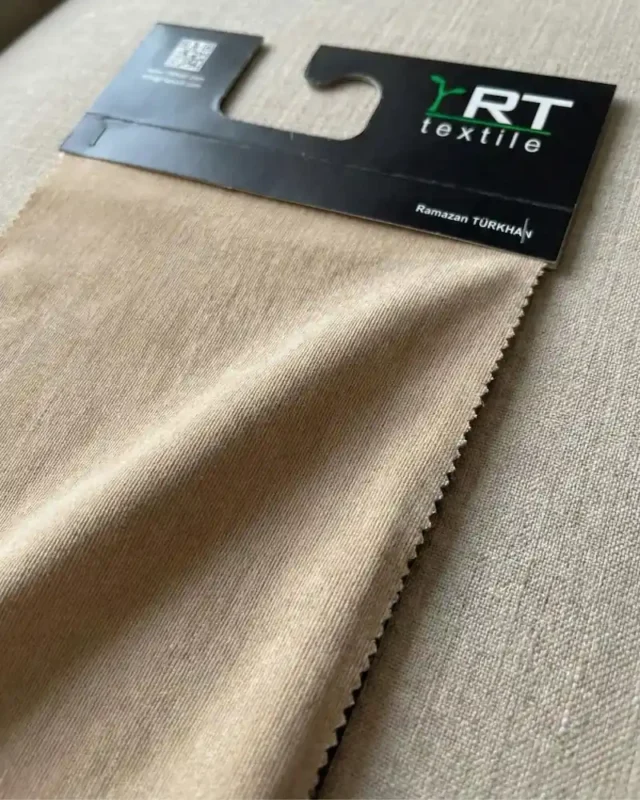
A supplier can look “premium” online and still fail your sustainability requirements once you ask for proof. In knits, sustainability is not one thing—it’s a chain.
1) Fiber & Material Choices
Sustainability starts with what goes into the yarn:
- Organic cotton (traceable and certified)
- Recycled polyester / recycled blends (chain of custody matters)
- Better cotton initiatives (depends on your brand policy)
- Responsible viscose / cellulosics (requires specific proof)
Buyer mindset: Don’t ask “Is it sustainable?” Ask “What’s the fiber origin and how is it verified?”
2) Dyeing & Chemical Management (Where Most Risk Lives)
Knitted fabric production becomes sustainability-critical in dyeing and finishing:
- restricted substances compliance
- chemical inventory and MRSL alignment
- wastewater testing and discharge control
- color consistency without “chemical shortcuts”
Reality check: If your supplier can’t explain their chemical policy clearly, your risk is already high.
3) Energy & Water Footprint
Even if your brand doesn’t require exact LCA numbers today, many buyers now request:
- water reduction practices
- heat recovery / energy efficiency
- renewable energy claims (only if evidenced)
4) Social Compliance & Traceability
Trustworthy suppliers don’t only talk about fabric. They can document:
- labor compliance (audits, policies, corrective actions)
- traceability by lot / order / batch
- consistent supplier onboarding for yarn and auxiliaries
The 4 Pillars of a Trustworthy Sustainable Supplier
If you remember only one thing, remember this: Trust is built with systems, not claims.
Pillar 1 — Verifiable Proof (Not Marketing)
A sustainable supplier can provide documentation that’s:
- current (not expired)
- traceable (certificate number / scope)
- relevant to your product (not a random PDF)
Pillar 2 — Process Control (Especially in Dyeing)
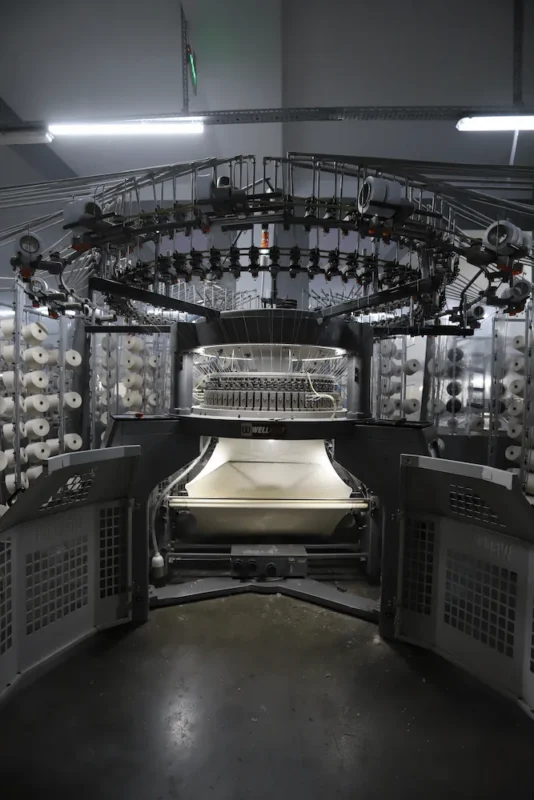
The strongest suppliers control the critical stages (or can prove control through audited partners). In practice, in-house dyeing and lab capability often improves:
- shade consistency
- chemical compliance control
- faster corrective action during bulk
Pillar 3 — Consistency at Scale
A supplier can be “perfect” on a small lab order and fail at production scale. Trustworthy suppliers can show:
- bulk lot continuity strategy
- repeatability controls (lab dip → bulk approval workflow)
- testing discipline
Pillar 4 — Transparency & Communication
Sustainable sourcing fails when communication fails. A trustworthy supplier:
- answers compliance questions directly
- shares documents without drama
- has clear timelines for lab dips, approvals, and bulk
Certifications in Knitted Fabrics
What They Prove (and What They Don’t)
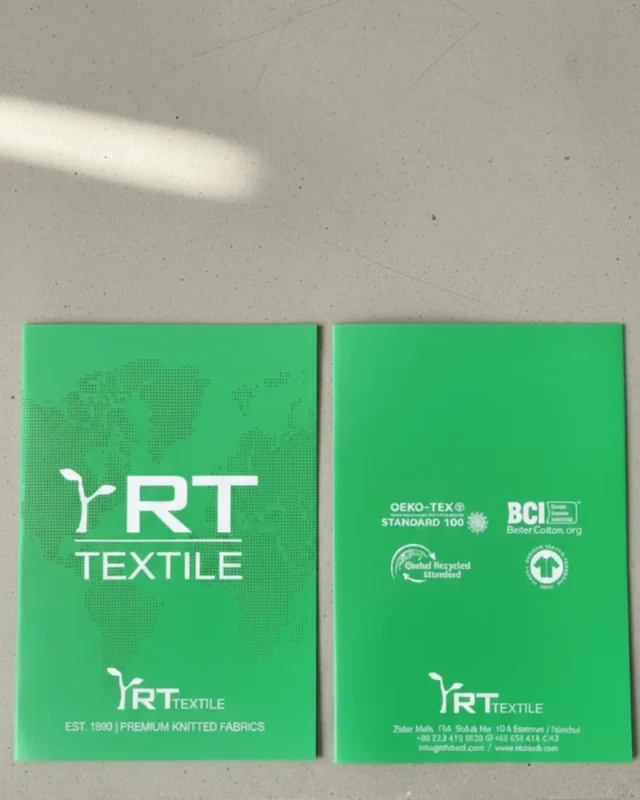
Certifications can be powerful—if you treat them like verification tools, not “labels to impress.”
OEKO‑TEX® STANDARD 100 (Product Safety)
What it helps prove:
- the textile has been tested for certain harmful substances (product safety focus)
What it does not automatically prove:
- organic content
- recycled content
- low water usage
- fair wages
GOTS (Organic Textile Standard)
What it helps prove:
- organic fiber status plus environmental & social criteria across the supply chain (when certified properly)
What it does not automatically prove:
- that every single product in the factory is organic (scope matters)
GRS (Recycled Content + Chain of Custody)
What it helps prove:
- recycled content verification plus traceability and additional environmental/social/chemical requirements through the supply chain
Important: Always ask for certificate scope + transaction/traceability rules relevant to your order.
5‑Minute Supplier Trust Scorecard
Interactive: copy this into your notes and score each item 0 / 1 / 2
(0 = no proof, 1 = partial, 2 = clear proof)
A) Traceability (Max 10)
- Can they identify yarn source by lot? (0/1/2)
- Can they provide batch dyeing records? (0/1/2)
- Can they provide test reports for your fabric type? (0/1/2)
- Can they provide a certificate scope with a valid date? (0/1/2)
- Can they show repeatability from lab to bulk? (0/1/2)
B) Chemical & Process Control (Max 10)
- Do they have MRSL alignment (or equivalent policy)? (0/1/2)
- Do they disclose chemical management approach clearly? (0/1/2)
- Do they have wastewater testing practice (or audited partner proof)? (0/1/2)
- Do they have color lab / lab dip workflow? (0/1/2)
- Do they handle corrective actions with evidence? (0/1/2)
C) Production Reliability (Max 10)
- Can they commit to lead time with capacity logic? (0/1/2)
- Do they explain MOQ and how it impacts waste? (0/1/2)
- Do they provide roll‑level QC logic? (0/1/2)
- Do they provide shrinkage/pilling/fastness results? (0/1/2)
- Do they have stable quality standards (documented)? (0/1/2)
Interpretation
- 24–30: strong candidate
- 16–23: proceed with a pilot + strict controls
- 0–15: risk is too high (or they’re not ready)
Documents to Request Before You Place a Purchase Order
If a supplier is serious, they won’t hesitate.
Compliance Pack (Request List)
- Certificates: scope, validity date, certificate number
- Restricted substances / MRSL policy (or brand compliance statement)
- Test reports relevant to knitted fabrics (your product category)
- Material declarations (fiber composition, blend ratios)
- Traceability statement (how lots and batches are tracked)
For Dyehouses / Finishing Facilities
- Chemical management approach (how they select & control chemistry)
- Wastewater testing summary (if available)
- Process flow overview (lab dip → bulk approval → bulk dyeing)
Greenwashing Red Flags (Fast Filters)
If you see these, ask harder questions:
- “Eco-friendly” everywhere, but no certificate numbers
- Old PDFs with no scope pages
- Vague answers like “we follow European standards” (which ones?)
- “Organic” claim without chain-of-custody logic
- Refusing to share basic test reports
How to Run a Sustainability‑Ready Pilot Order (Without Losing Time)
A pilot order is not just to test fabric—it’s to test the supplier’s systems.
Step 1 — Define the acceptance criteria upfront
For knitted fabrics, typical criteria include:
- GSM tolerance range
- shade tolerance / ΔE policy (if your brand uses it)
- shrinkage tolerance
- pilling performance target
- fastness requirements
Step 2 — Lab Dip + Bulk Approval Discipline
A trustworthy supplier will insist on:
- lab dip approval before bulk
- bulk shade continuity checks
- “one approval” logic: no improvisation mid‑production
Step 3 — Keep the pilot realistic
Don’t pilot with a tiny quantity that can’t represent bulk reality. Make sure the pilot includes:
- actual dyeing conditions
- actual finishing route
- roll inspection outputs
Buyer-Friendly Copy/Paste Supplier Questions (Use This in RFQs)
Copy & paste this list into your email or RFQ form:
- Which certifications apply to this specific fabric and facility? Please share certificate scope + validity date.
- Can you share your chemical compliance approach (MRSL / restricted substances policy)?
- Can you provide recent test reports (shrinkage, pilling, color fastness) for a similar knit construction?
- How do you ensure shade consistency from lab dip to bulk?
- Do you track yarn lots and dyeing batches? What’s your traceability method?
- What is your standard lead time and what affects it most?
- How do you manage quality control at roll level?
- Can you support custom GSM and custom color development? What is the workflow?
- What is your MOQ policy—and how do you handle sampling and waste?
- If an issue occurs, what is your corrective action process?
FAQ — Sustainable Knitted Fabric Sourcing
Does “OEKO‑TEX” mean organic?
Not necessarily. It’s primarily about harmful substance testing / product safety. Organic status requires organic-focused certification and traceability.
Is organic always more sustainable than recycled?
Depends on fiber, region, processing, and your brand’s policy. Sustainability is a system, not a single label.
What should I prioritize first: certificates or factory capability?
Both matter, but if the factory’s process control is weak, certificates won’t save bulk consistency. Start with capability + proof.
Can a supplier be sustainable if they don’t have every certification?
Yes—if they provide verifiable systems and proof. Certifications help, but transparency and documentation discipline often matter more in B2B.
Closing: Trust Is Built in the Process
If you source knitted fabrics for global markets, a sustainable supplier is one who can consistently prove compliance, control dyeing risks, and deliver quality at scale—without hiding behind vague claims.
If you want, you can build a short “Supplier Compliance Pack” landing page and link to it from this article (great for lead capture).