Collar & Cuff Trims
The finished pieces that complete a garment at the neck, wrist and waist. Unlike yardage, trims are knitted ready-made and spec'd by dimension, not by the metre: flat-knit polo collars (plain, tipped or striped), 1×1 and 2×2 rib cuffs and waistbands, neckbands and bindings. Because RT Tekstil knits, dyes and finishes under one roof, your collar and cuff leave the same dye bath, in the same approved shade, as the body fabric they belong to — so collar, cuff and body read as one piece, not three.
Match your trim to the body — on real fabric.
A collar or cuff is almost never chosen on its own palette: it is ordered to match the main garment fabric, so the collar reads as one piece with a polo and the cuff with a sweat. In our integrated dyehouse we run the trim and the body fabric through the same lab-dip and the same dye bath, bringing two different constructions to a single approved color reference. The card below shows the neutral core range buyers match to most often; every shade is photographed on real fabric at order stage.
Note: On-screen tones show structure only; the binding color reference is set by pantone/lab-dip. Share the color number of your body fabric and we match the trim to it — a plain solid match or a striped tipping, both built in the same bath.
Finished pieces, bought ready-made — not cut from yardage.
Collar & cuff trims are the ready-made knitted pieces that finish a garment at the neck, wrist and waist. The most familiar example is the polo collar: a separate, flat-knit, shaped collar with a closed edge, matched to its sleeve cuffs. The same logic runs through to the ribbed cuffs and waistbands of a sweatshirt, and down to the neckbands and bindings that close a tee neckline or a hood edge. They are components, finished to shape before they ever reach the sewing line.
What sets trims apart from other knits is how they are specified. Single jersey, rib or piqué yardage is talked about by weight and the metre; a trim is spec'd by dimension and structure — a given collar length and height, a cuff width and circumference, a waistband depth. So a trim order is not defined by "how many metres" but by "which size, how many pieces, to what measurement." It is a made-to-spec part, not a roll of cloth.
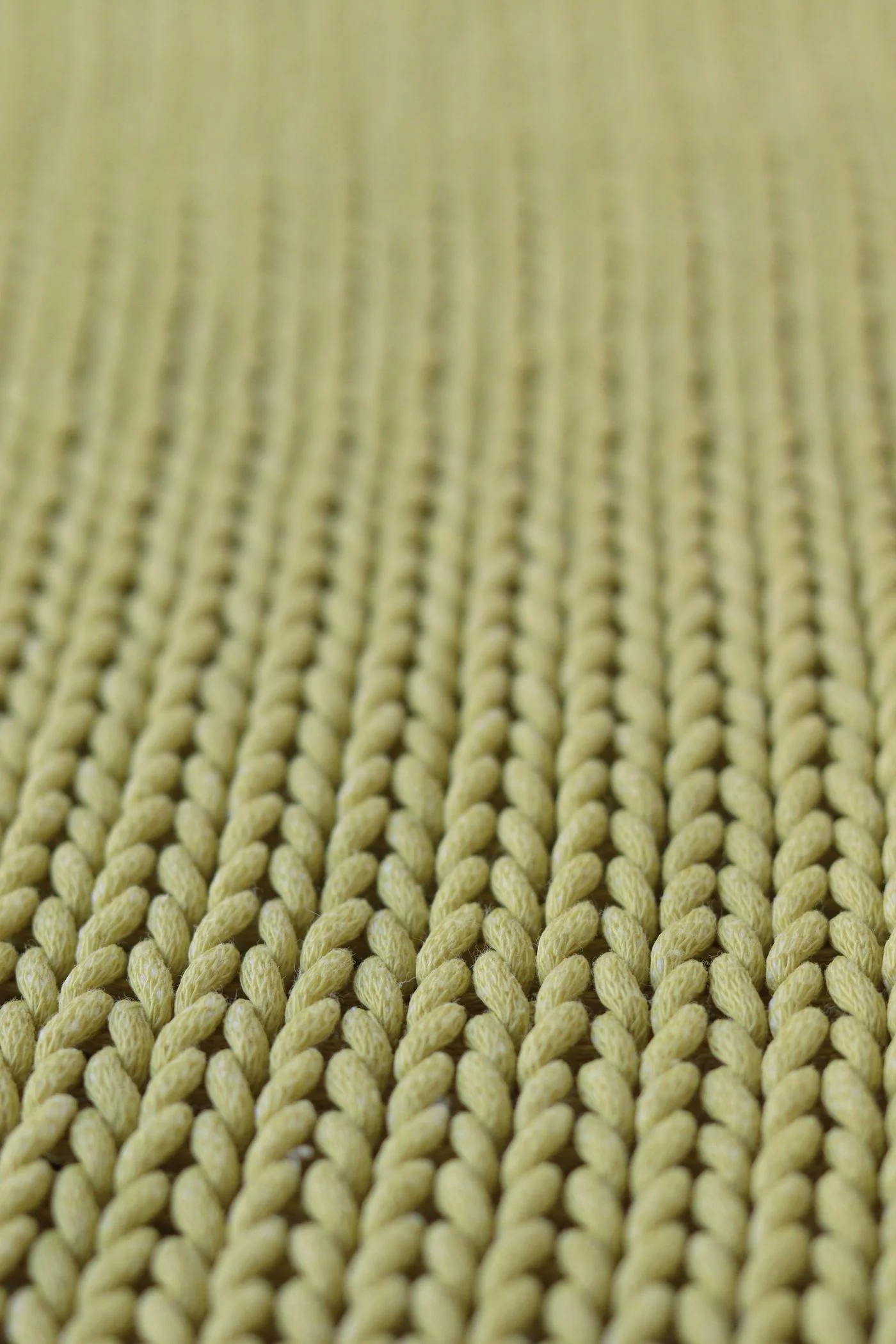
There are two structural families. Flat-knit polo collars and plackets are knitted on flat machines, shaped and finished edge-to-edge, giving the crisp, self-contained collar a polo needs. Rib cuffs and waistbands are knitted in 1×1 or 2×2 rib for high crosswise stretch and strong snap-back, so a cuff slips over the hand and returns to the wrist. Both are built on a cotton/elastane recipe; the elastane is what lets a trim stretch on the way over and then recover to its first shape. Trims are bought ready-made for exactly this reason — the shaping, the closed edges and the recovery are knitted in, not cut from a flat fabric.
Purpose-knit collar and cuff trims are sized and finished ready for immediate sewing, making them the most efficient way to complete garments cut from rib knit stretch body fabric. They are equally at home on structured polo styles made in piqué lacoste performance fabric, where a matching knit trim ties the garment's construction language together. Brands building T-shirt ranges in single jersey fine-knit fabric will find that ready-made trims reduce cut-and-sew time while maintaining consistent collar roll and cuff recovery across a production run. For broader context, our complete guide to knit fabric types and uses pairs well with the full knitted-fabrics portfolio overview.
For buyers · ConstructionTipped, striped or solid: how knitted polo collars and cuffs are built
The first decision in a trim is structure; the second is size. Structure sets how the collar looks and where it sits; size sets how it matches your body pattern. Settling both up front is what keeps size consistent across a shipment and keeps assembly fast on the sewing line.
Flat-knit polo collars and plackets
A polo collar is knitted flat, then shaped and closed at the edges so it holds its form without curling. Knitted to its own length and height, a clean solid collar sits in the same shade as the body and reads as one piece with the polo. This is the standard finish for corporate polos, workwear, baby and kids wear and drapey basics — neat, neutral, easy to set. The matching plackets and front bands are built the same way, edge-finished and ready to sew.
Jacquard tipping lines and stripes
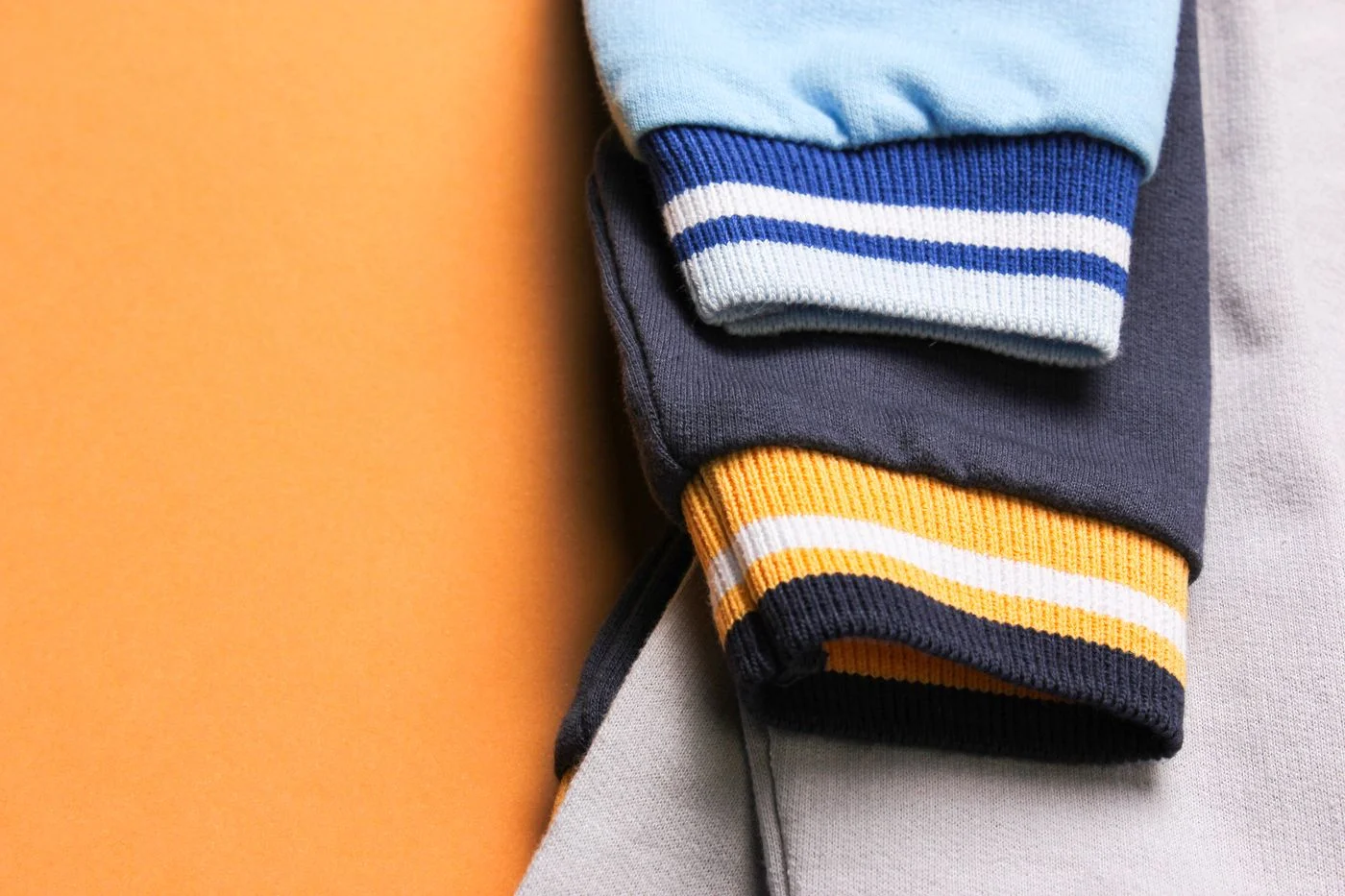
Tipping is the contrast line — one stripe or several — knitted into the edge of a collar and cuff. It is formed in jacquard, knitted into the structure, not printed on top; that is why a tipping line does not crack, peel or fade in the wash the way a print can. Buyers use it to carry a brand color on a corporate polo, a team line on a sports polo, or simply a white-and-red edge on a navy collar. The number of stripes, their width and their colors are all set per order, and a striped collar usually ships with a matching striped cuff.
1×1 versus 2×2 rib for cuffs and waistbands
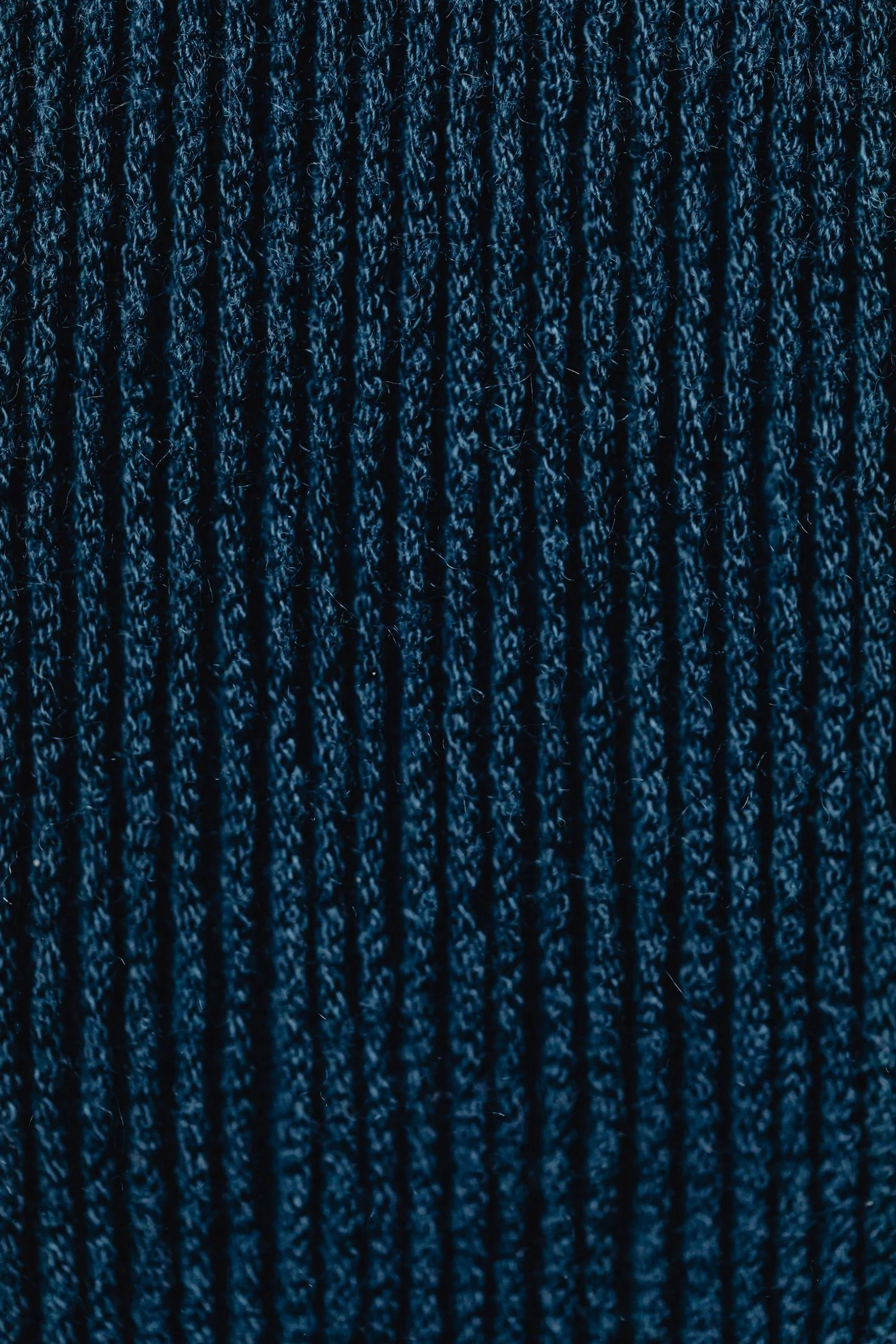
Cuffs and waistbands are rib, and the rib repeat changes the character. 1×1 rib — one face needle, one back — gives a fine, close channel: flat and neutral, suited to lighter cuffs, neckbands and kids wear. 2×2 rib — two and two — gives a bolder, wider channel that is sportier and fuller, preferred for pronounced cuffs and waistbands and oversized trims; it generally stretches a little further and snaps back with more body. Edge finishes complete the part: a folded double-layer cuff for durability, a clean knitted selvedge on a waistband, a turned neckband closing a crew neck.
| Trim type | Structure | Typical use |
|---|---|---|
| Flat-knit polo collar | Flat-knit, shaped, edge-finished; plain or with knitted-in tipping | Polo shirts, corporate and sports polos, plackets and front bands |
| Rib cuff | 1×1 or 2×2 rib, cotton/elastane; folded or single edge | Polo sleeve cuffs, sweat cuffs, bomber and jacket cuffs |
| Rib waistband | 2×2 rib for body, strong recovery | Sweatshirts, hoodies, jackets, knitwear hems |
| Neckband / binding | Fine 1×1 rib or flat binding strip | Tee neckbands, hood edges, sleeve and hem bindings |
| Tipped / striped collar | Jacquard stripe knitted into the edge, not printed | Corporate brand-line polos, club and team polos |
Note: Solid and jacquard structures can be combined in one order — for example a plain cuff with a tipped collar. Share your target garment and size set; we recommend the structure, the stripe layout and the measurements.
Technical dataSpec summary.
| Attribute | Value / range | Note |
|---|---|---|
| Trim type | Collars · cuffs · waistbands · neckbands · bindings | Ready-made pieces, finished to shape |
| Composition | Cotton / elastane | Matched to the body recipe; 100% cotton binding also possible |
| Structure | Flat-knit · 1×1 / 2×2 rib · jacquard tipping | Solid collar or knitted-in edge stripe |
| Dimensions / width | Made to spec | Collar length and height, cuff width and circumference, waistband depth |
| Recovery | Elastane for snap-back | Set so cuffs and waistbands hold shape after wash |
| Color match | Same lab-dip as main fabric | Body and trim from one bath → identical shade |
| Color fastness | OEKO-TEX® · lab-dip | Integrated dyehouse, zero color-deviation target |
Where collar & cuff trims sit.
The gallery below shows the end-use range of the trims — from polo collar to waistband, cuff to tipped edge. Live images are filled with real products made from these pieces (no stock imagery).
 Real
Real Real
Real Real
Real Real
RealColor-matching trims to your garment: one approved shade across body and trim
The quality of a polo or sweat usually breaks on one detail: the shade gap between the trim and the body. When the collar and the body are dyed in separate baths, even against the same color number a visible drift can appear — a "nearly navy" collar on a navy body, a faintly cream binding on a white tee. A buyer may not put it into words, but they see it instantly and the garment looks cheap. This is where integrated production pays off in something you can measure.
One lab-dip, one bath
- Your body fabric and the trim pass through a single lab-dip approval and, wherever possible, the same dye bath.
- The result: polo + collar, sweat + cuff in the exact same shade — no shade-matching headache on the floor.
Visual continuity
- When the trim sits in the same tone as the body, the garment reads as one piece; the eye sees no "join" at the collar edge.
- Separate baths mean a drift risk: the same pantone target in two kettles can still leave a small but visible deviation.
Order trims with the fabric
- Because both are made under one roof, the trim is planned in the same lot as your body fabric.
- So collar, cuff and body share one approved shade and one delivery — no separate trim supplier to wait on.
Controlled contrast when you want it
- For a tipped or striped collar, the colors are not left to chance; each stripe color is approved on its own lab-dip.
- The contrast then looks intentional — designed, not a color that failed to take.
Body and trim, one roof, one shade.
Integrated production means the whole process — from knitting the yarn to dyeing and finishing — is in one hand. For collar & cuff trims this delivers an advantage a separate trim supplier cannot: we make your body fabric and the collar/cuff that belongs to it under one roof, from the same lab-dip and bath. The result is color unity (the polo and its collar in one shade) and delivery confidence (no waiting on a separate trim source). Our in-house color lab works to a zero color-deviation target.
Send your body color, we'll knit the matching trim.
Share your main-fabric color number, your size set and your collar/cuff measurements; we'll prepare a plain or tipped trim sample and quote at container scale.
Collar & cuff trims, answered.
We supply ready-made knitted trims: flat-knit polo collars (plain, tipped or striped) with matching plackets, 1×1 and 2×2 rib cuffs and waistbands, and neckbands and bindings for tee necklines, hood edges and hems. Because we also knit the matching body fabrics under the same roof, you can source the trim and the body from one supplier.
Yes — this is the core advantage of integrated production. Your body fabric and the trim pass through the same lab-dip approval and, wherever possible, the same dye bath, so the polo and its collar (or the sweat and its cuff) come out in the exact same shade, with a zero color-deviation target. Just share the color number of your body fabric and we bring both to one approved color reference.
A flat-knit polo collar is knitted flat, then shaped and edge-finished so it holds a crisp form — that is what a polo neck needs. Rib cuffs and waistbands are knitted in 1×1 or 2×2 rib for high crosswise stretch and strong snap-back, so they slip over the hand or the body and return to shape. Collars are about a finished, stable form; cuffs and waistbands are about stretch and recovery.
Yes. The contrast line on a collar and cuff is knitted in as jacquard tipping — a knitted structure, not a print — so it does not crack, peel or fade in the wash. We use it for corporate brand-line polos, club and team polos, and simple edge stripes. The number of stripes, their width and their colors are set per order, and a striped collar usually ships with a matching striped cuff.
Yes. Trims are made to dimension, matched to your body pattern: the collar length and height, the cuff width and circumference, and the waistband depth are sized to your garment and your size set (for example S–XXL, or custom measurements). Share the size set or pattern measurements and each size is knitted to its own dimension, which keeps assembly clean and reduces waste at the sewing line.
Yes. Since we knit, dye and finish both under one roof, the trim is planned in the same lot as your body fabric. Collar, cuff and body then share one approved shade and one delivery, so you are not waiting on a separate trim supplier or matching shades from two sources after the fact.
We work at container scale. The process starts with a sample; once the structure (plain or tipped), the color match and the measurements are approved, the quote and production plan are confirmed through our central channel. Trims can be planned in the same lot as your body fabric, so trim and body ship together.