Polyester Scuba Fabric
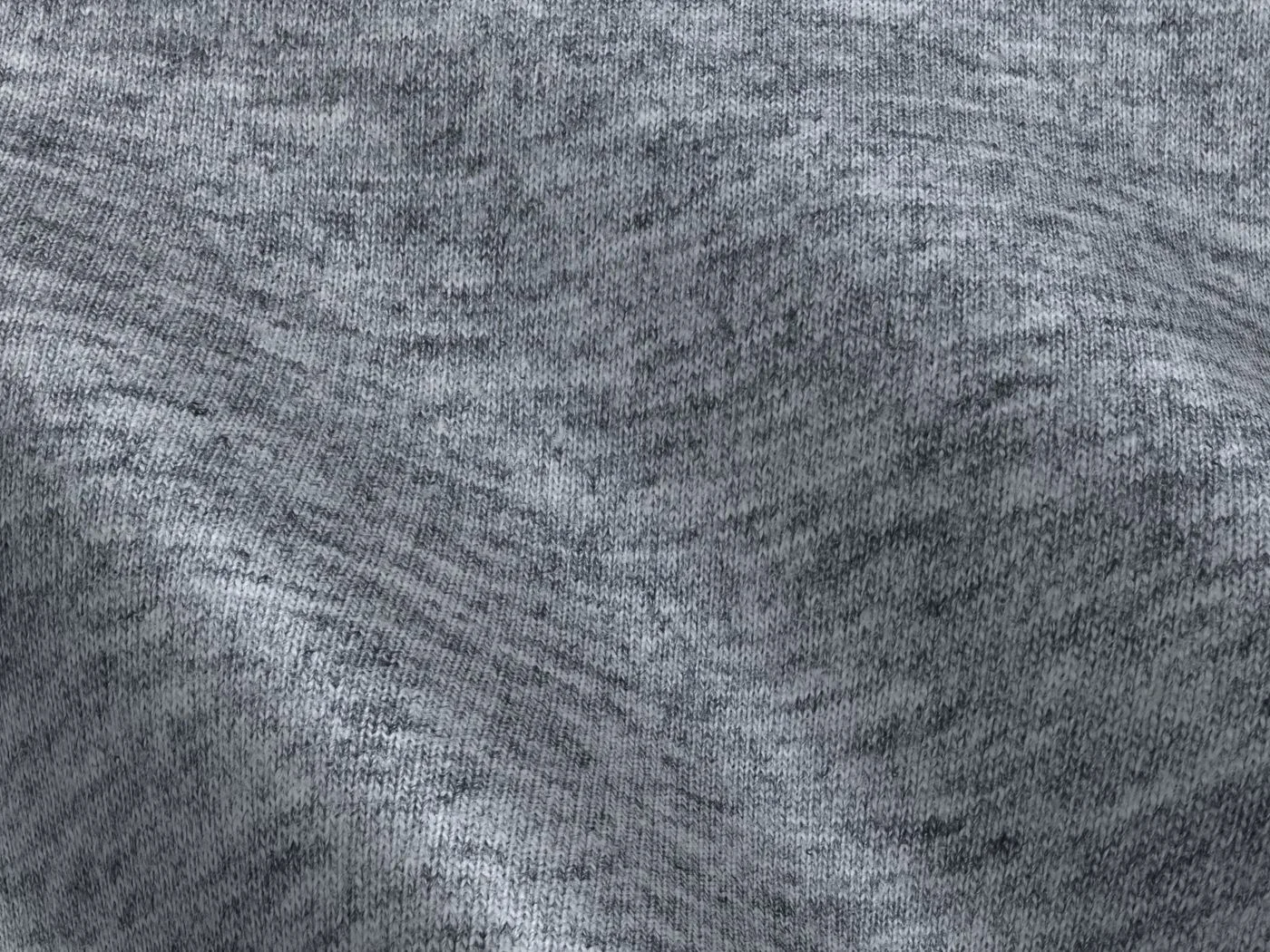
Polyester scuba is a 100% polyester double-knit built for one job: holding a sharp, vivid sublimation print. The face is dense, smooth and very even — a clean canvas where ink dye turns into color with no texture noise. At 220–300 g/m² it stays structured and durable, which is why it carries printed activewear, leggings and all-over-print dresses. We knit, dye and finish it under one roof, so the white base you print on is consistent roll to roll.
Ground shades — and the white base your print lives on.
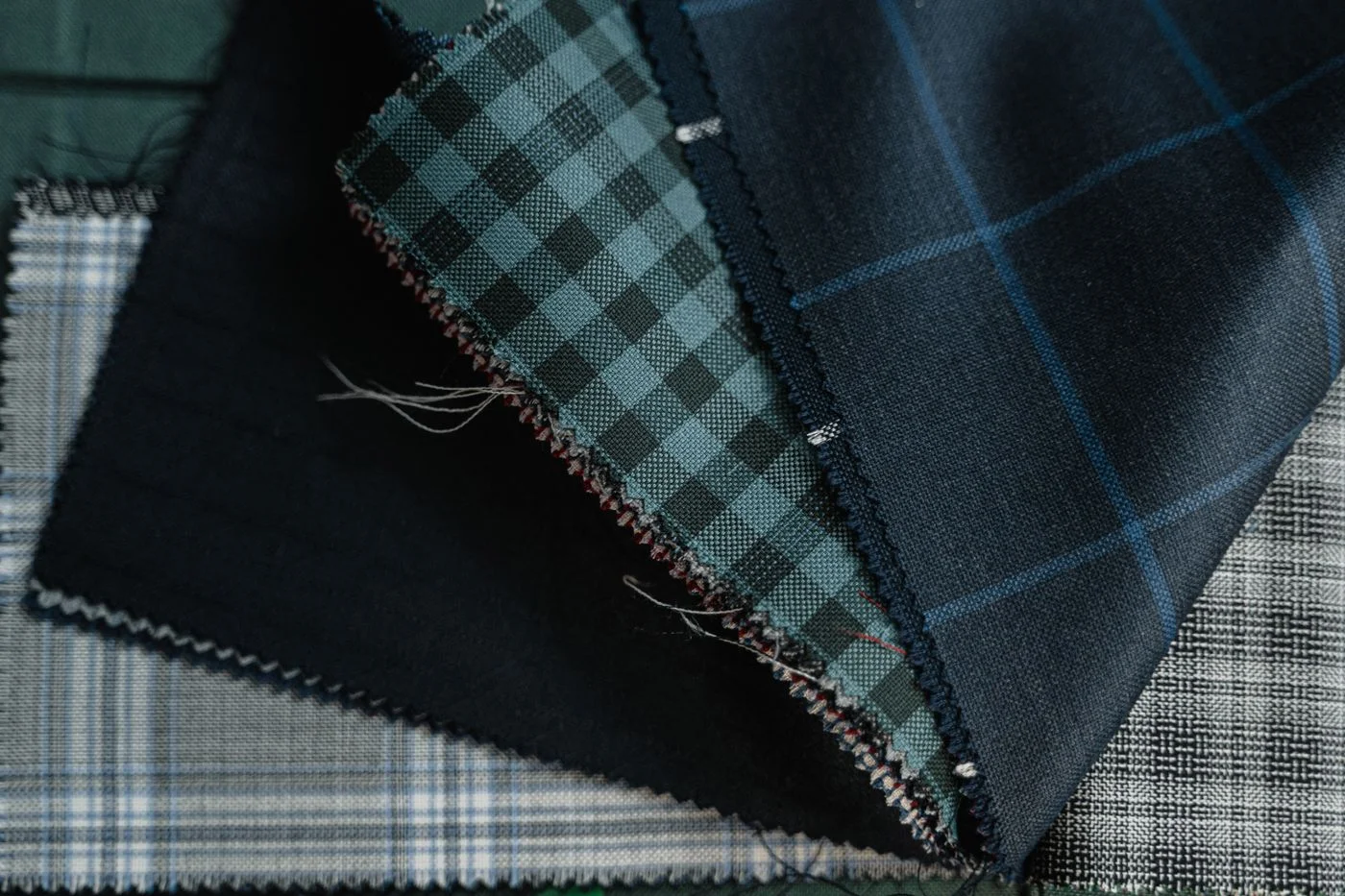
Polyester scuba is dyed with disperse dye in our integrated dyehouse, and every shade is locked with a lab-dip approval before bulk runs, targeting zero color deviation. The card below shows how the solid-color range is structured for unprinted pieces. For sublimation work the story is different: print starts from a white or very light base, so the design — not the dye lot — carries the color.
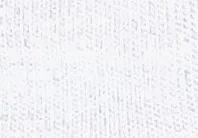
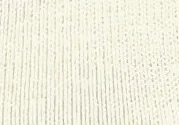

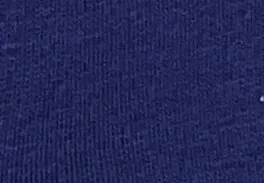

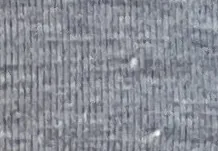

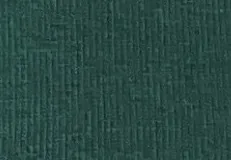
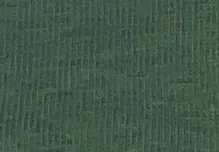
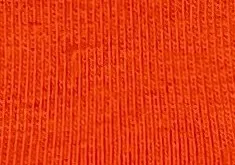
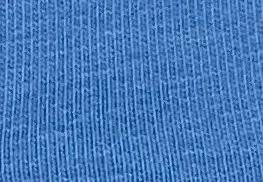
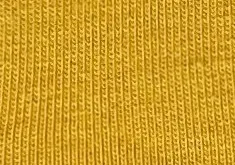
Note: on-screen tones show structure only; the binding reference is given by Pantone or lab-dip. For sublimation production we supply a controlled white/light base so your printed colors land true. Custom ground shades are matched by lab-dip.
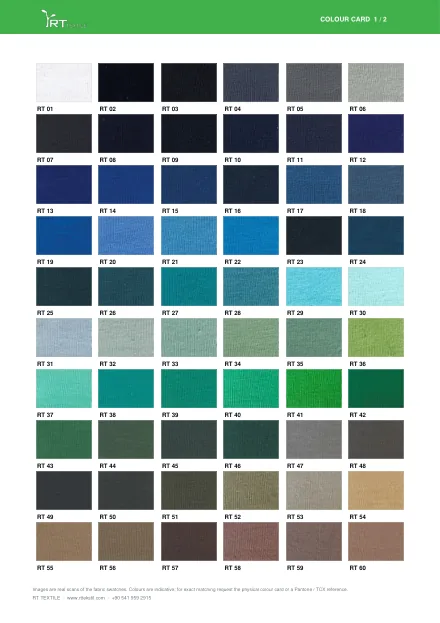
Download the full color card
Real fabric scans of all 120 standard colors in a single PDF. Quote the code of the shade you pick (e.g. RT 10); custom shades are matched to Pantone through a lab-dip.
A double-knit built as a print surface.
Scuba is a double-knit construction: two needle beds interlock the loops so the fabric has body, holds its shape and shows almost the same clean face on both sides. The "scuba" name comes from the smooth, slightly compact hand that recalls neoprene — but unlike neoprene there is no foam layer; this is a single, all-textile knit. In the polyester version the yarn is 100% polyester, and that material choice is the whole point.
A flat, even, tightly knit polyester face is the ideal substrate for dye-sublimation print. Sublimation is a polyester process — the dye bonds into the fibre itself rather than sitting on top — so a smooth surface with no slubs or loop shadow lets the image stay sharp and the colors stay vivid. The result is a fabric that reads as a structured, durable knit and prints like a photo.
Polyester scuba vs cotton scuba
Same family, opposite priorities. Polyester scuba is chosen for print and color: it takes sublimation, holds bright designs and shrugs off moisture, which suits active and performance pieces. Cotton scuba (a cotton-rich blend) is chosen for breathability and a softer, more natural hand against the skin, and it is printed by reactive or pigment methods instead of sublimation. If the design is the hero, polyester scuba is the substrate; if next-to-skin comfort leads, cotton scuba is the answer.
Polyester scuba's dimensional stability and resistance to pilling make it the preferred technical choice in structured bodywear and tailored knitwear, complementing the natural-fibre option offered by cotton scuba soft-hand fabric. Both constructions sit within the wider category best explored through our scuba diving knit fabric overview, which covers the full specification range available. For a clean, finished reverse on cut-and-sewn styles, doubleface reversible structured fabric extends the scuba aesthetic into an inherently two-sided construction. For broader context, our complete guide to knit fabric types and uses pairs well with the full knitted-fabrics portfolio overview.
Print engineering · SublimationSublimation printing on polyester scuba: why the smooth face matters.
Dye-sublimation turns solid dye into gas under heat and pressure; the gas penetrates the polyester fibre and the dye re-solidifies inside the filament. Because there is no surface layer of ink, a sublimated print does not crack, peel or stiffen the hand — the printed area feels the same as the unprinted ground. This bond only happens with polyester, which is why a 100% polyester scuba is the natural match.
Surface quality governs print quality. On a smooth, evenly knit face the heat and dye transfer uniformly, so fine lines stay crisp and gradients stay clean. A rough or uneven surface scatters the image — edges blur, solids look mottled and color sits unevenly. That is why we knit the polyester scuba face dense and regular: print sharpness and color vividness are set at the loom, before the design ever reaches the fabric.
| What you want | Why it depends on the knit | How we control it |
|---|---|---|
| Sharp lines & small text | An even, low-texture face stops edges from feathering | Dense, regular polyester scuba face; consistent loop length |
| Vivid, true color | Uniform white base lets dye land at full saturation | Controlled white/light ground, lab-dip-locked base shade |
| Clean all-over print | Surface evenness keeps large solids from mottling | Stable open-width finishing, flat presentation |
| Wash-fast result | Dye must bond into the fibre, not sit on the surface | 100% polyester substrate that accepts true sublimation |
Wash-fastness
- Because the dye lives inside the fibre, a correctly sublimated print on polyester scuba does not wash out and resists rub and fade through normal garment laundering.
- There is no coating to peel, so repeated washing and wear keep the printed face intact.
- OEKO-TEX® certified base; color fastness is verified against the approved lab-dip reference.
Design considerations
- All-over print (AOP): the smooth face suits edge-to-edge repeats and photographic artwork.
- Panel / placement print: design is positioned per pattern piece so motifs land where you want post-cut.
- White base only: sublimation can darken but not lighten, so start from white/light and build color up.
Spec summary.
| Property | Value / range | Note |
|---|---|---|
| Weight | 220–300 g/m² | 220 lighter active · 260 all-round · 300 structured |
| Composition | 100% polyester · optional elastane | Lead polyester for print; add elastane for stretch variants |
| Knit | Polyester scuba double-knit | Interlocked double-bed; smooth, even print face |
| Width | Open width | Slit flat for free cutting and all-over print layout |
| Stretch | Structured; mechanical to 4-way | 100% PES gives body; elastane adds recovery for active pieces |
| Print method | Sublimation (dye-sublimation) | Dye bonds into the fibre; AOP and panel placement |
| Color fastness | OEKO-TEX® · lab-dip | Integrated dyehouse, zero color deviation target on base |
What polyester scuba becomes.
The gallery below shows the printed end-use range polyester scuba is built for. Production images are filled with real garments made from this fabric — no stock photography.
 Real
Real Real
Real Real
Real Real
RealSpeccing printed activewear: GSM, stretch and color hold.
Three decisions shape a polyester scuba program: how heavy, how stretchy, and how consistent the printed color is across a run. Weight sets drape and structure; stretch sets fit and movement; the base shade sets whether your print lands the same on the first roll and the last. Here is how we tune each one.
| Weight | Character | Best for | Stretch fit |
|---|---|---|---|
| 220 g/m² | Lighter, more fluid, breathable | Tops, AOP tees, lighter dresses | Mechanical or light elastane |
| 260 g/m² | Balanced body and structure | All-round activewear, dresses | Add elastane for 4-way movement |
| 300 g/m² | Firm, sculpted, very structured | Leggings, shaping & structured pieces | Elastane for recovery under load |
Stretch & recovery
- 100% polyester: body and shape memory from the double-knit itself; mechanical stretch, ideal where print fidelity leads.
- Polyester + elastane: adds 4-way stretch and recovery so active pieces move and snap back — the choice for leggings and fitted sportswear.
- Tell us the garment and target fit; we set the elastane share to balance stretch against print stability.
Color hold via lab-dip
- For printed goods, consistency lives in the base: an undyed or white ground that is uniform roll to roll.
- We lock that base with a lab-dip approval in our in-house color lab, targeting zero color deviation before bulk.
- A stable white base means your sublimated colors read the same across the whole order — not lighter on roll one and warmer on roll ten.
Knitting, dyeing and finishing under one roof.
Integrated production means the polyester scuba is knitted, dyed and finished in one place rather than passed between subcontractors. For a print substrate that matters twice over: the base is consistent (one dyehouse, lab-dip-locked white) and delivery is dependable (no dependence on outside mills). Our in-house color lab works to a zero color-deviation target, and with spare capacity we plan timing around your program.
Start with a sample, print with confidence.
Share your target weight, stretch and print method; we will prepare a polyester scuba sample on a controlled white base and quote at container scale.
Polyester scuba, answered.
Polyester scuba is a 100% polyester double-knit with a smooth, even, slightly compact face. It is structured and durable like other scuba knits, but the material and surface are chosen specifically to act as a substrate for sublimation print, which is why it is so common in printed activewear and all-over-print dresses.
Sublimation is a polyester process: under heat and pressure the dye bonds into the polyester fibre instead of sitting on the surface. A 100% polyester scuba accepts that bond, and its smooth, even face keeps the image sharp and the colors vivid. The printed area feels the same as the unprinted ground — no cracking, peeling or stiffening.
Polyester scuba leads on print and color: it takes sublimation, holds bright designs and handles moisture, which suits active pieces. Cotton scuba is a cotton-rich blend chosen for breathability and a softer, more natural hand; it is printed by reactive or pigment methods, not sublimation. Choose by priority — design and color, or next-to-skin comfort.
By garment: around 220 g/m² for lighter, more fluid tops and dresses; 260 g/m² as a balanced all-round activewear and dress weight; 300 g/m² for firm, structured pieces such as leggings and shaping garments. Tell us the end use and we recommend a weight.
No. Because a correctly sublimated print is dyed inside the polyester fibre rather than coated on top, it does not wash out and resists rubbing and fading through normal garment laundering. There is no surface layer to peel, so the printed face stays intact over repeated washes.
The 100% polyester double-knit gives body and mechanical stretch on its own, ideal where print fidelity leads. For active pieces that need 4-way stretch and recovery — leggings, fitted sportswear — we add elastane and set the share to your target fit while keeping the print surface stable.
We work at container scale. The process starts with a sample on a controlled white base; once the weight, stretch and base shade are approved, the quote, lead time and production plan are confirmed through our central channel. With 4–5× ready capacity, we plan timing around your program.