Rib Knit Fabric
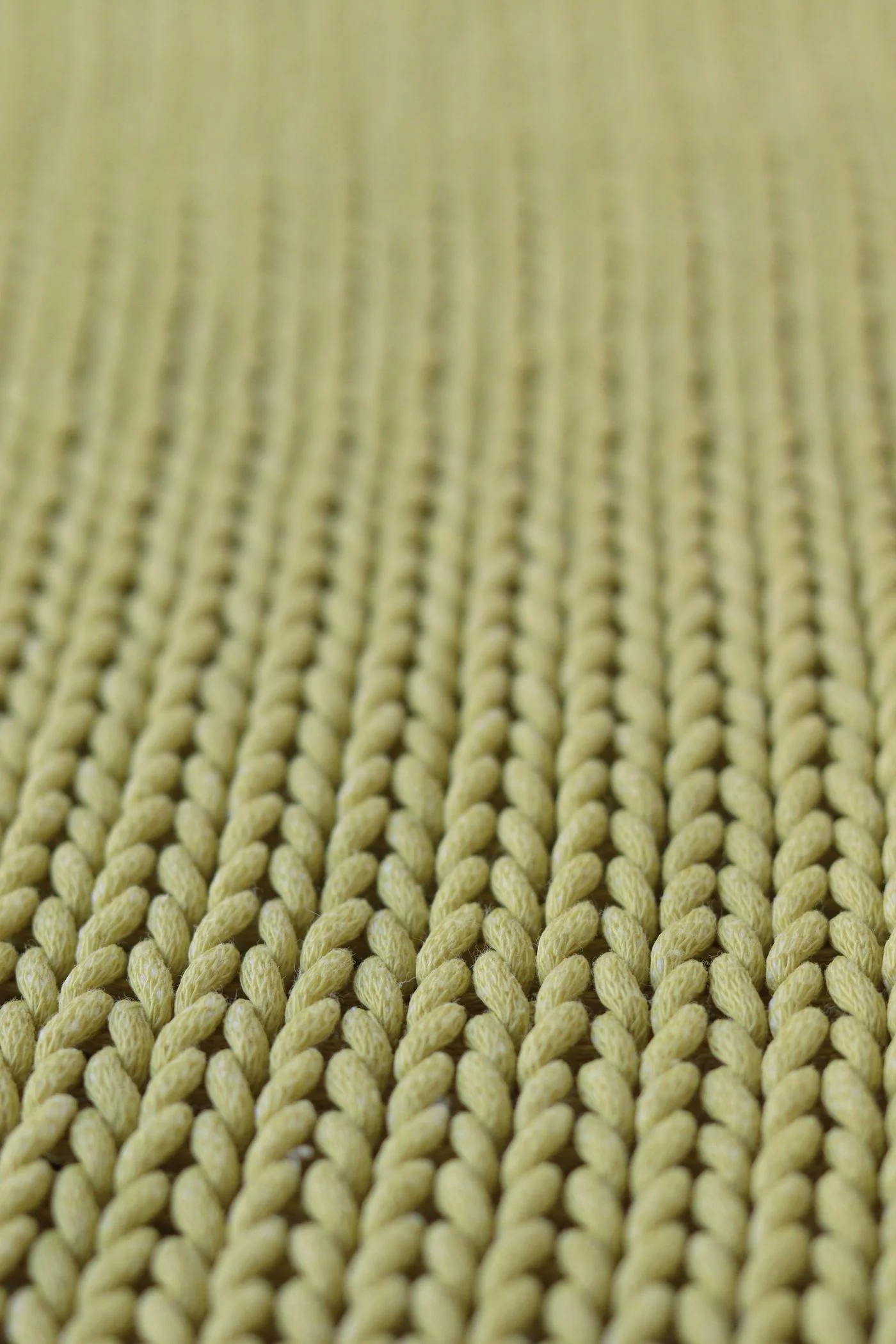
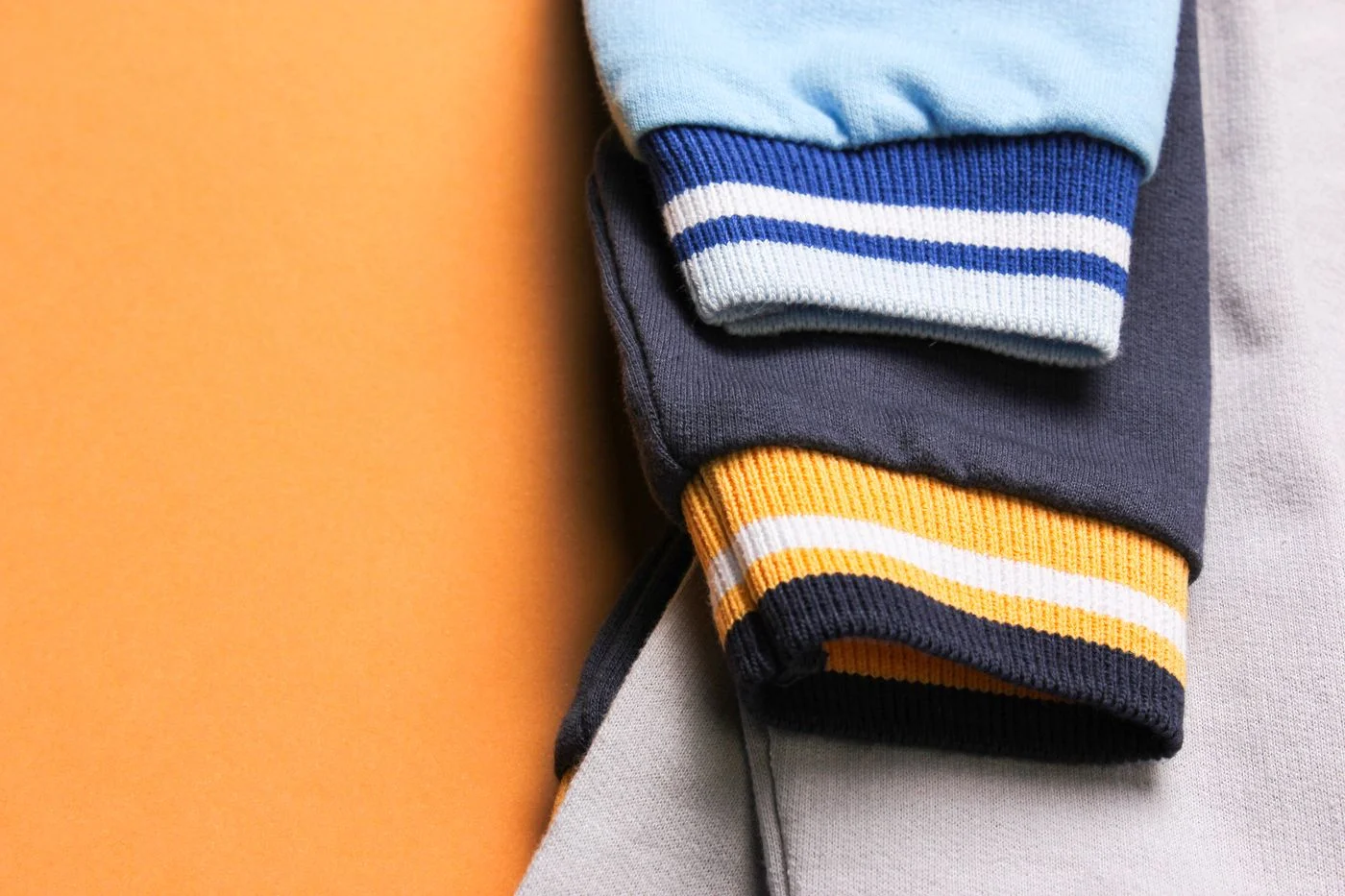
The stretch-and-recovery partner to jersey and fleece. Knitted by alternating front and back needles, rib forms vertical wales (ribs) with the same V-face on both sides — it is reversible. That structure delivers high crosswise stretch and a strong snap-back, which is why it is the standard for collars, cuffs and waistbands; in finer weights the very same fabric becomes a full garment for bodysuits, rib tops and dresses. At RT Tekstil we knit, dye and finish under one roof, so a rib trim leaves the same dye bath, in the same shade, as the body fabric it belongs to.
Match your trim to the body — on real fabric.
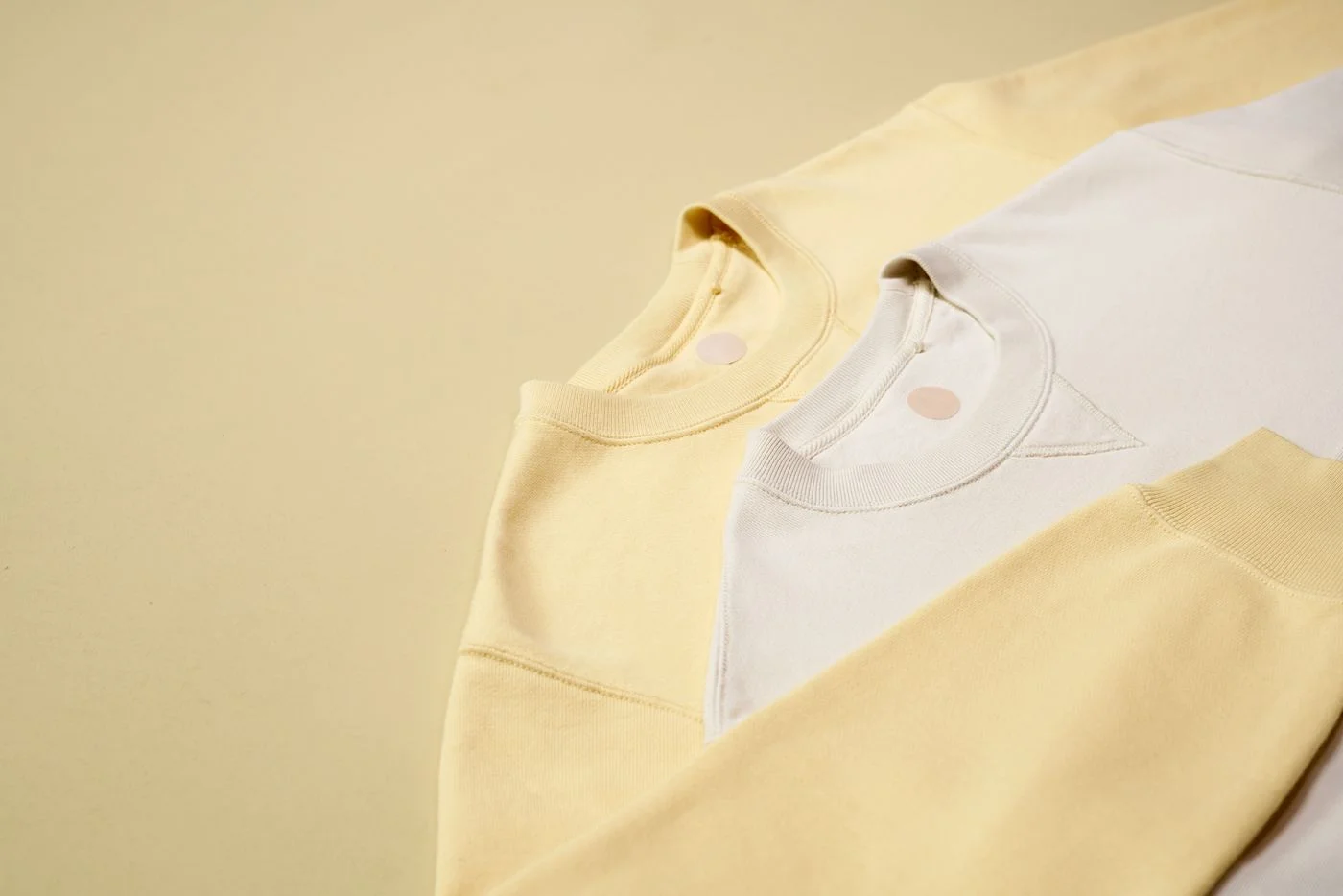
Rib is rarely chosen on its own palette: buyers want the rib in the same shade as their main fabric, so a collar reads as one piece with the tee and a cuff with the sweat. In our integrated dyehouse we run the rib and the body fabric through the same lab-dip and the same dye bath, bringing two different constructions to a single approved color reference. The card below shows the neutral core range; every shade is photographed on real fabric at order stage.
Note: On-screen tones indicate the range only; the binding color reference is given by Pantone / lab-dip. To match rib to your body fabric, share the color number of the main fabric — we bring both to the same bath.
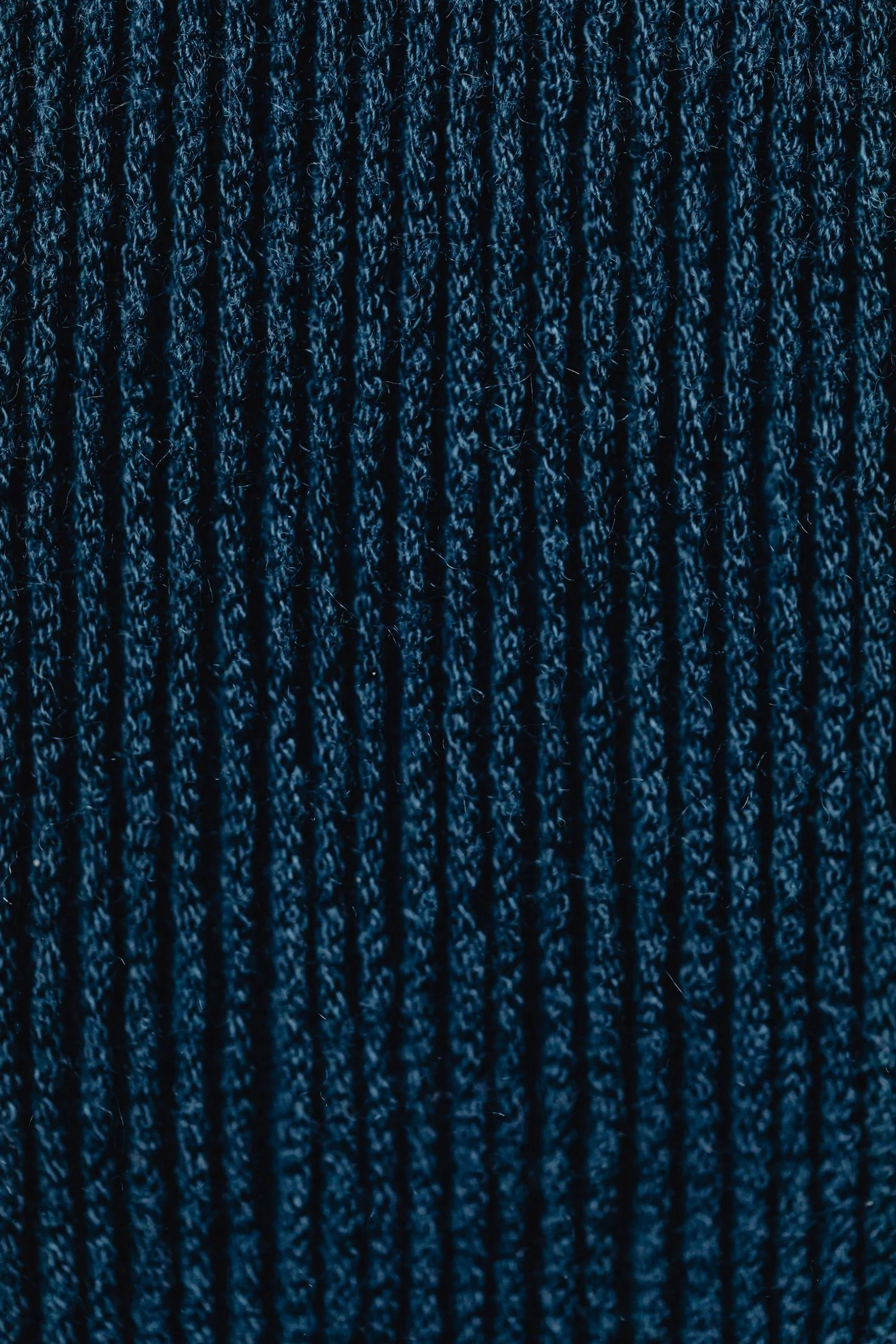
Vertical ribs, identical on both faces.
Rib knit is built on a knitting machine where front and back needles work in alternation. That needle order pulls some loops to the face and the next to the back, so the surface forms vertical channels — the ribs, or wales — sitting back to back like fine columns. Unlike single jersey, both faces of rib are the same: it is reversible, with no distinct right and wrong side, which makes it forgiving to cut and sew.
The payoff of that channel structure is elasticity. The ribs open under tension and close again when released, so rib gives very high crosswise stretch paired with strong recovery (snap-back). That is exactly why collars, cuffs and waistbands are made from it: the part stretches as a head or hand passes through, then returns to its shape instead of going slack.
Rib also has a second life. The same elastic structure, knitted in a finer weight, becomes a full-garment fabric: figure-hugging bodysuits, fitted rib tops and dresses, and structured pieces. So rib is both a trim and a stand-alone body fabric — a dual role that makes it the most versatile member of a knit program.
Rib vs. interlock: why they are not the same
Both are double-knit, double-needle constructions, but they behave very differently. Rib alternates face and back wales, so it pulls in across the width and stretches hard crosswise. Interlock interlocks two rows so the two faces lock together into a smooth, stable, balanced fabric with far less stretch. In short: reach for rib when you need stretch and recovery (trims, fitted bodies); reach for interlock when you need a smooth, dimensionally stable panel. Rib is the structural recovery partner that jersey and fleece bodies lack on their own.
Rib knit's characteristic vertical wale and strong two-way stretch make it the go-to trim and body fabric for garments cut in single jersey lightweight knit fabric. Its natural elasticity also complements the denser construction of interlock double-knit fabric in blocked or panelled designs. For finished collar and cuff components ready to sew, buyers should also consider our collar and cuff trim accessories, which are produced from the same rib structures for a perfectly matched set. For broader context, our complete guide to knit fabric types and uses pairs well with the full knitted-fabrics portfolio overview.
For buyers · 1×1 vs 2×21×1 vs 2×2 rib: stretch ratio, recovery and where each belongs.
The "by" number in rib tells you how the needles are grouped. In 1×1, needles alternate one face, one back; the result is a fine, close rib. In 2×2, they group two face, two back, so the rib is wider and more pronounced. That simple difference changes the look, the stretch ratio and — most importantly for sourcing — where the fabric belongs.
1×1 rib reads flatter and more neutral, with a controlled, even stretch; it is the choice for fine neckbands and bindings, baby and children's wear, and drapey bodysuits and underwear, where the trim should do its job without drawing the eye. 2×2 rib shows bolder channels and a fuller hand, stretches further across the width and snaps back with more body; it is the sporty look for cuffs and waistbands, the visible ribbing of oversized pieces, and sweatshirt and hoodie finishing.
| Property | 1×1 rib | 2×2 rib |
|---|---|---|
| Rib repeat | Fine, close channel (one face / one back) | Bold, wide channel (two face / two back) |
| Stretch ratio | High, even and controlled crosswise stretch | Higher crosswise stretch, fuller give |
| Recovery | Clean, reliable snap-back; lies flat | Strong, springy snap-back with more body |
| Look | Flat, neutral, fine vertical lines | Pronounced ribs; sporty and dimensional |
| Typical use | Fine neckbands, bindings, baby/kids, drapey bodysuits, underwear | Cuffs, waistbands, sporty looks, oversized trims, sweat finishing |
Note: Intermediate repeats are also possible (e.g. 2×1). Tell us the target part — collar, waistband or full garment — and we recommend the rib repeat and weight to suit it.
Technical dataSpec summary.
| Property | Value / range | Note |
|---|---|---|
| Weight | 180–260 g/m² | 180–210 fine trim / bodysuit · 210–260 pronounced cuff / waistband |
| Composition | Cotton / elastane · cotton | 100% cotton rib is possible; elastane recommended for recovery |
| Rib gauge | Rib 1×1 / 2×2 | Repeat chosen by end use; intermediate (2×1) on request |
| Width | Tubular & open width | Tubular favored for collars/cuffs (low waste); open width for full garments |
| Stretch & recovery | High crosswise stretch + strong recovery | Rib channel gives mechanical snap-back; elastane makes it lasting |
| Shrinkage | Controlled | Kept to a minimum with correct finishing and compacting |
| Color fastness | OEKO-TEX® · lab-dip | Same bath as the body fabric → matched shade |
Rib's double role: trim and full garment.
The gallery below shows rib working both as a finishing trim (collar, cuff, waistband) and as a full-garment fabric. Live images are filled with real products made from this fabric (no stock photography is used).
 Real
Real Real
Real Real
Real Real
RealRib as the recovery partner: matching trims to your main fabric — and its color.
A collar or cuff is judged not on day one but at the hundredth wash. The deciding property is recovery — how fully the fabric returns to its original shape after being stretched. Poor recovery is the best-known complaint in production: the slack collar that stretches as it goes over the head and never closes again. Jersey and fleece bodies do not stretch and recover enough on their own, so they need a partner; rib is that partner, spec'd to a recovery target through both the rib repeat and the elastane content.
What controls recovery
- Rib channel: ribs open under tension and close when released — mechanical snap-back is built into rib by nature.
- Elastane %: a cotton/elastane recipe makes that return permanent; the higher the elastane, the stronger the recovery and the longer the cuff lasts.
- Result: the right recovery means a collar or cuff that keeps closing and holding its shape, pull after pull.
Matching to your body fabric
- Color: rib and body fabric pass through the same lab-dip and dye bath → tee and collar in the exact same shade, zero color deviation.
- Weight: the rib weight is balanced to the body — fine rib to light jersey, fuller rib to heavy sweat.
- Supply: we plan collar and cuff by the width or to measure, in the same order as your body fabric — both leave in one lot.
Trim and body from one roof, in one shade.
Integrated production is an extra advantage for rib: because we run the body fabric (jersey, sweat) and the rib that goes with it in the same dyehouse, from the same lab-dip and dye bath, there is no tone gap between trim and body. The "almost the same" problem of two near-matching colors from two suppliers disappears; color consistency (lab-dip approval → bulk production in the same shade) and delivery confidence (no dependence on a middle supplier) sit in one pair of hands. Our in-house color lab works to a zero color-deviation target, and the fabric is OEKO-TEX® certified.
Let's match your rib to your main fabric.
Share your rib repeat (1×1 / 2×2), weight and body-fabric color; we will prepare a rib sample and quote at container scale.
Rib knit, answered.
It comes down to the needle grouping and therefore the rib repeat. In 1×1, needles alternate one face and one back, giving a fine, close channel — a flat, neutral surface suited to fine neckbands, baby and kids wear, and drapey bodysuits. In 2×2, needles group two face and two back, giving a bold, wide channel — sportier and fuller, preferred for pronounced cuffs and waistbands and oversized trims. 2×2 generally stretches a little further and snaps back with more body.
Yes. Because rib alternates face and back wales, both faces look the same — there is no distinct right and wrong side. That makes it forgiving to cut and sew for collars, cuffs and bindings, and it is one of the practical differences from single jersey, which has a clear face and back.
Rib gives very high crosswise stretch with strong recovery (snap-back). The ribs open under tension and close when released, so the fabric stretches generously across the width and returns to shape. With a cotton/elastane recipe the recovery becomes lasting, which is why rib holds up over many wash-and-wear cycles where a plain knit would go slack.
The rib channel already provides mechanical snap-back, so 100% cotton rib works; but for long-lasting recovery on cuffs and waistbands a cotton/elastane recipe is recommended. The higher the elastane, the stronger and more durable the recovery. Rather than a fixed number, we set the elastane to your stretch and recovery target for the part and confirm it on a sample.
Yes — and this is our strongest point. We run the rib and your main fabric through the same lab-dip and the same dye bath in our integrated dyehouse, so the tee and its collar (or the sweat and its cuff) come out in the exact same shade, with a zero color-deviation target. Just share the color number of your body fabric and we bring both constructions to one approved color reference.
Both. As a trim, rib makes the collars, cuffs, neckbands and waistbands that need stretch and recovery. Knitted in a finer weight it becomes a full-garment fabric for figure-hugging bodysuits, fitted rib tops and dresses. Full garments are usually 1×1 in a lighter weight; pronounced trims lean to 2×2 in a fuller weight.
We work at container scale. The process starts with a sample; once the rib repeat, weight and color are approved, the quote and production plan are confirmed through our central channel. Rib can be planned in the same lot as your body fabric, so trim and body ship together.