
Collar & Cuff (Rib) Trims for Apparel
Rib collar and cuff trims color-matched to your main fabric, dyed in one lot in integrated production for zero color deviation. See GSM and request a sample.
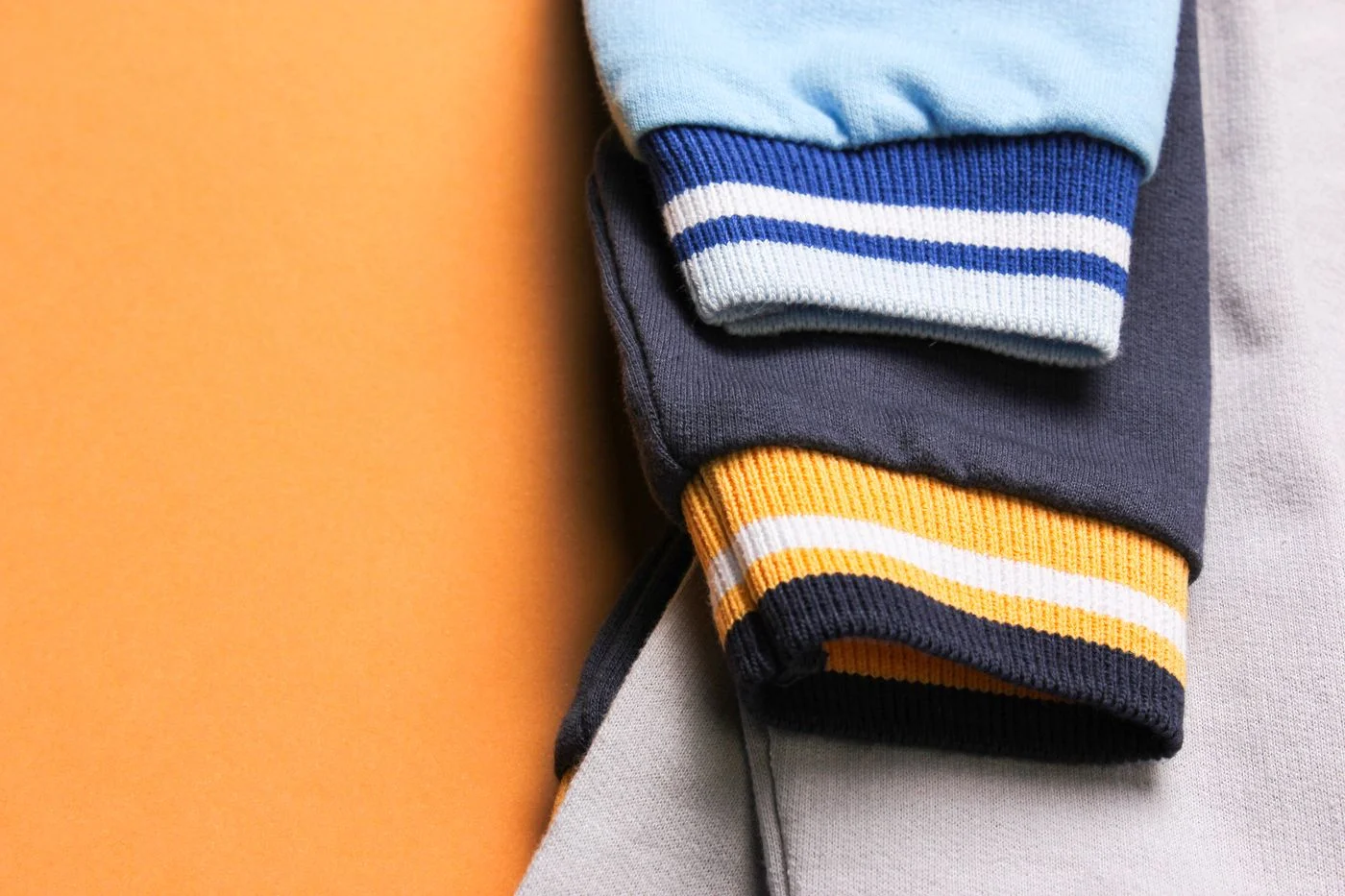
A garment is judged at the collar. Rib collar and cuff trims are the elastic rib pieces that finish a polo, a sweatshirt or a top — and they are the single detail buyers reject over most often, because a trim that is half a shade off the body makes the whole garment look mismatched. We supply these trims the way that removes that risk: dyed in the same lot as your main fabric, in one integrated production, so the collar matches the body.
What rib trims are, and why matching is the whole job
Rib collar and cuff trims are cotton-elastane rib knits, formed to width, that finish the openings of a garment: the polo collar and cuffs, sweatshirt neck-and-hem ribs, waistbands, and binding or neck tape. Their defining property is recovery — the rib stretches over a head or a hand and springs back, so the opening grips and holds its shape through repeated wear and wash.
But recovery is the easy part. The hard part, and the reason buyers come to us, is color. A finished polo has a pique or jersey body and a rib collar and cuff, and the two have to read as one shade under retail lighting. When the body is dyed at one mill and the trim at another, the lots drift and the garment looks two-tone. That is a sourcing problem, not a knitting problem, and it is solved by dyeing both to the same standard in the same house.
How integrated production keeps trim and body in one shade
At RT Tekstil, knitting, dyeing and finishing sit under one roof in our Istanbul integrated production, supported by a dedicated dyehouse and color laboratory in Tekirdağ. That structure is exactly what makes matched trim possible. When you approve a lab-dip shade, we dye your main fabric and its rib trim to that same standard, in coordinated dye lots, and our color-lab process targets zero color deviation between them.
The practical result for an importer is one less thing to go wrong at container scale. Over 40+ years and exports to more than 40 countries, matched trim is one of the most common reasons buyers consolidate their body and trim onto a single supplier. Our rib qualities are produced to OEKO-TEX® Standard 100 requirements as well, which the EU and brand buyers audit.
Rib trim GSM and composition guide
Match the trim weight to the body and the end use. This is the working range we run for cotton-elastane rib trims, with the main fabrics they finish for reference.
| Element | Knit | Composition | Weight (g/m²) | Best-fit use |
|---|---|---|---|---|
| Rib trim — light | Rib 1x1 | Cotton-elastane | 180–200 | Polo collars, fine cuffs, binding |
| Rib trim — structured | Rib 2x2 | Cotton-elastane | 240–260 | Sweatshirt cuffs, waistbands |
| Pique body (matched) | Piqué | Cotton / cotton-poly | 180–240 | Polo shirt body the trim matches |
A 1x1 rib around 200 g/m² gives clean, flat collar recovery for classic polos; move to a denser 2x2 rib near 240–260 g/m² when the buyer wants a chunkier, more structured cuff or waistband. Elastane content is tuned to the grip you need. To see the body fabrics these trims are matched to, read our guides to pique lacoste fabric for polo shirts and the full rib and pique knit fabric family.
Request color-matched trim samples and a quote
Start with a matched sample, not an order. Send your main fabric details, the trim type and width, target GSM, composition, colors and tonnage through our central contact page, and we return a lab-dip plan, a price and an honest lead time. We supply at container scale — typically 10 to 100 tons of body and trim combined, split across your colors — and ship to your port or to your door on agreed Incoterms. When the trim sample matches your body to standard, we book the bulk run. If your program also uses printed pieces, our seasonal print collections for apparel can be coordinated in the same order.
Frequently asked questions
What are rib collar and cuff trims?
They are the pre-formed rib knit collars, cuffs, waistbands and binding tapes that finish a garment. Made from cotton-elastane rib at roughly 180 to 260 g/m², they stretch and recover so the opening grips and keeps its shape wash after wash. A polo collar and cuff is the most familiar example, but the same trims finish sweatshirts, tops and bodysuits.
How do you match the trim color to my main fabric?
Because knitting, dyeing and finishing run under one roof, we dye your main fabric and its rib trim to the same lab-dip standard, in coordinated dye lots. That is how we hold zero color deviation between the body and the collar or cuff. Split-sourced trim from a different dyer is the most common cause of a two-tone finished garment.
What GSM and composition are the rib trims?
Our rib trims are cotton-elastane, typically 180 to 260 g/m². A 1x1 rib near 200 g/m² gives clean collar recovery; a denser 2x2 rib toward 240 to 260 g/m² suits a chunkier, more structured cuff or waistband. We match the trim weight and elastane content to your main fabric and end use.
Can I order trims and main fabric together?
Yes, and it is the reason to source from us. Ordering the pique or jersey body and the matching rib collar-and-cuff trim in one program lets us coordinate the dye lots and guarantee they match. Volumes are container scale, typically 10 to 100 tons combined, split across colors and fabric types as your range needs.
Are the rib trims OEKO-TEX certified?
Our cotton-elastane rib qualities are produced to OEKO-TEX® Standard 100 requirements, which is what EU and retail-brand buyers audit for. We can confirm the applicable certification scope for the specific trim quality and shade you plan to import alongside your main fabric.
How do I request a trim sample and quote?
Send your main fabric details, the trim type and width, target GSM, composition, colors and quantity through our central contact page. We reply with a lab-dip plan, a price and an honest lead time, and we start with an approved sample before the bulk run so the trim matches the body exactly.