
Single Jersey Fabric Supplier — Weight, Composition and Uses
Single jersey knit fabric from Turkey: GSM weights, composition and t-shirt uses, with integrated production and OEKO-TEX quality. Request a sample today.
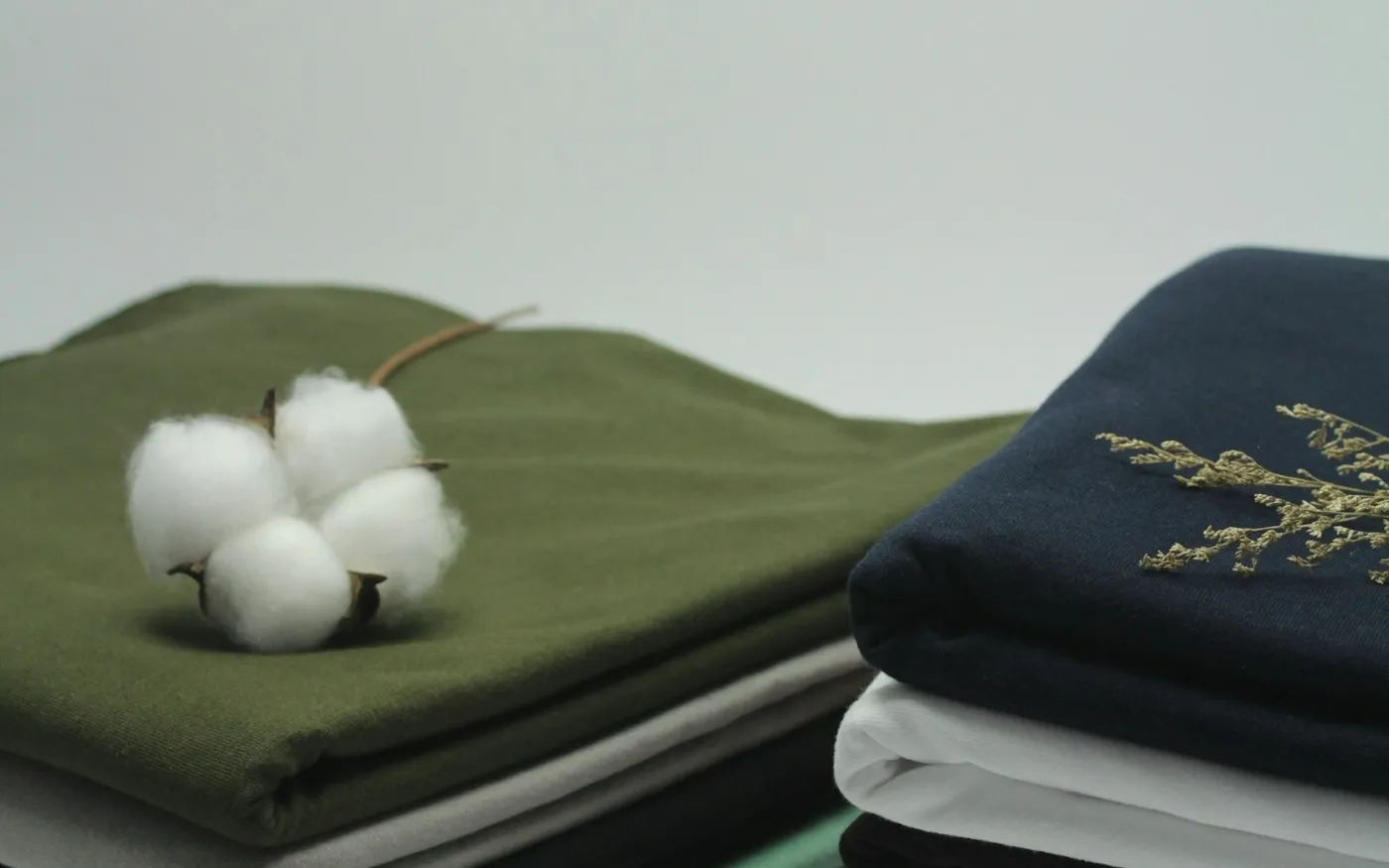
Single jersey fabric is the backbone of the knit t-shirt business, and choosing the right weight and composition decides how your finished garment drapes, wears and holds colour. As an integrated knitter and dyer based in Turkey, we have supplied single jersey to apparel brands and importers in 40+ countries since 1980, and the questions from serious buyers are always the same: which GSM, which blend, and can you hold the shade across a full container. This page answers those questions the way our own sales and production teams would in a sourcing meeting.
What single jersey fabric is and how it is knitted
Single jersey is a weft-knit fabric produced on a single needle bed, which is exactly why it has a smooth face of neat V-shaped loops and a looped, slightly textured back. That one-bed construction makes it light, breathable and fluid, and it is the reason the fabric drapes so well on the body. It is also the reason the cut edges tend to curl, a behaviour every experienced cutting room plans for.
In our Istanbul facility, knitting, dyeing and finishing run under one roof, so a single jersey order moves from greige to dyed, finished rolls without leaving our control. The construction is simple; the discipline is in the yarn selection, the loop tension and the finishing that sets the final weight and hand. Get those three right and single jersey becomes the most versatile fabric in a knitwear collection.
At a glance — single jersey basics
- Knit type: weft knit, single needle bed (single jersey / süprem)
- Typical weight: 120–220 g/m² depending on end use
- Common blends: 100% cotton, cotton-elastane, polyester and cotton-poly
- Core uses: t-shirts, dresses, underwear, linings, light tops
Single jersey weight (GSM): matching grams to garment
Weight is the first spec a buyer should lock down, because it changes cost, hand and end use more than any other variable. In knit fabric, weight is measured in grams per square metre (g/m²), and single jersey generally runs from about 120 to 220 g/m². Lighter cloth feels airy and economical but shows the body more; heavier cloth feels premium and opaque but costs more per garment. The table below is the practical map our team uses when a buyer describes the product they are building.
| Weight (g/m²) | Character | Best-fit garments |
|---|---|---|
| 120–140 | Light, airy, slightly sheer, fluid drape | Summer tees, layering tops, women's light dresses |
| 150–180 | Balanced, opaque, the classic t-shirt hand | Everyday and promotional t-shirts, basic tops |
| 190–220 | Dense, structured, premium and opaque | Oversized and boxy tees, premium basics, fashion cuts |
A common mistake we see from first-time importers is ordering the lightest weight to save on cost, then finding the finished t-shirt feels thin on the shelf next to competitors. The fix is rarely the heaviest cloth either. For a mainstream retail t-shirt, 160–180 g/m² usually hits the sweet spot of feel, opacity and price, and that is the range most of our export t-shirt programmes sit in.
Composition and blends: cotton, elastane and polyester
After weight, composition is the decision that shapes performance and price. Single jersey is knit most often from combed cotton, but the blend you choose should follow the garment's job, not habit. Here is how the main builds behave in the real world, based on what we knit day to day.
| Composition | What it delivers | Typical application |
|---|---|---|
| 100% cotton | Soft, breathable, natural hand, takes reactive dye well | Classic t-shirts, kidswear, everyday basics |
| Cotton-elastane (approx. 92–95% / 5–8%) | Adds stretch and recovery, holds fitted shapes | Fitted tees, women's tops, dresses, underwear |
| Cotton-polyester | More dimensional stability, easier care, lower shrinkage | Promotional tees, workwear-adjacent basics |
| 100% polyester | Fast-drying, sublimation-ready, colour-fast prints | Printed and activewear-style tops |
Two practical notes from our production floor. First, elastane changes both stretch and the way a fabric relaxes after washing, so a fitted programme almost always benefits from a cotton-elastane build rather than pure cotton. Second, if your garment will carry all-over sublimation prints, a polyester single jersey is the honest choice; cotton will not hold a sublimation print the same way. Matching the blend to the finishing process avoids expensive surprises later.
Where single jersey fits in the knit family
Buyers rarely source one fabric in isolation, so it helps to see where single jersey sits against its neighbours in a knit collection. Single jersey is the light, drapey base; heavier fleece constructions carry the winter side of the range. If your programme is moving into sweatshirts and hoodies, our guide to sweatshirt and fleece fabrics covers the two- and three-thread constructions that sit above single jersey in weight.
| Fabric | Weight (g/m²) | Typical use vs. single jersey |
|---|---|---|
| Single jersey | 120–220 | Light, drapey base for t-shirts and dresses |
| Rib (ribana) | 180–260 | Stretchy trims, collars, cuffs and bodysuits |
| Piqué (lacost) | 180–240 | Textured surface for polo shirts and dresses |
| Interlock (kaşkorse) | 200–300 | Denser, velvety double-knit for premium tops |
| 2-thread fleece | 220–280 | Mid-season sweatshirts and hoodies |
Uses: what buyers actually make from single jersey
Single jersey earns its place as the most-ordered knit because it covers so much of a wardrobe. The obvious application is the t-shirt, but the same construction, tuned to a different weight and blend, becomes a summer dress, a piece of underwear or a soft lining. Below is a quick decision checklist buyers can run before they brief us.
Buyer decision checklist
- Garment type and target retail price point defined
- Target weight chosen in g/m² (not just "light" or "heavy")
- Composition matched to fit and print method (cotton vs. elastane vs. polyester)
- Colour standard supplied for lab-dip, or a shade chosen from our references
- Order volume estimated per colour and construction for container planning
- Certification requirements confirmed (for example OEKO-TEX® for the destination market)
Running through that list before the first email means our team can quote accurately and send the right samples the first time, which shortens the path from enquiry to bulk. It is the same checklist our own account managers keep in front of them during a sourcing call.
Quality, colour control and certification
The reason experienced importers keep coming back to an integrated mill is control. Because we knit, dye and finish under one roof in Istanbul, with a dedicated dyehouse and colour laboratory in Tekirdağ, a single jersey order does not pass through three separate subcontractors who each add tolerance and risk. Colour begins as an approved lab-dip, and we match that approved standard across the run with the goal of zero visible colour deviation from batch to batch.
That matters most on repeat programmes. When a retailer reorders a core t-shirt six months later, the new fabric has to hang next to the old one without a shade jump. Our lab-dip discipline and OEKO-TEX® credentials exist precisely so buyers can promise their own customers consistency and a fabric tested for harmful substances. After more than 40 years and exports to 40+ countries, that consistency is the quiet part of the business that keeps orders repeating.
Request a single jersey sample or container quote
The fastest way to evaluate single jersey fabric is to feel it. Tell us the garment you are building, your target weight in g/m², the composition and the colour standard, and we will prepare hangers and lab-dips for your technical team. From there we quote at container scale, generally 10 to 100 tons per colour and construction, and arrange shipping to your port or to your door. For a step-by-step look at ordering volumes, lab-dip approval and logistics, see our single jersey wholesale supply page. To request a sample or a quote, contact our team through the central contact form on our website.
Frequently asked questions
What GSM should I order for a standard t-shirt?
For most everyday t-shirts, buyers order single jersey between 150 and 180 g/m². Lighter 120–140 g/m² suits summer and layering styles; heavier 190–220 g/m² gives a premium, structured hand for boxy fits and oversized cuts.
Can single jersey be ordered with elastane for stretch?
Yes. We knit single jersey in 100% cotton, cotton-elastane and polyester blends. A cotton-elastane build (commonly 92–95% cotton with 5–8% elastane) adds recovery for fitted tees, dresses and underwear while keeping a soft cotton surface.
How do you keep colour consistent across a large order?
Every colour starts as an approved lab-dip in our Tekirdağ colour laboratory. Because knitting, dyeing and finishing sit under one roof, we match the approved standard batch to batch and target zero visible colour deviation across a full container run.
What order volumes do you produce for export?
We work at container scale, typically 10 to 100 tons per colour and construction, and export to 40+ countries. Smaller trial lots are possible after sample approval so you can test the fabric before committing to a full production run.
Is single jersey prone to curling at the edges?
Single jersey naturally curls at cut edges because it is knitted on one needle bed. Correct finishing, a stable GSM and, where needed, a ribbed trim or a slightly heavier weight reduce curling and make cutting and sewing easier in the factory.
Do you provide samples before a bulk order?
Yes. We send physical hangers and lab-dips so your technical and buying teams can assess weight, composition and shade in person. Sample approval precedes every bulk order and protects both sides before container production begins.