
Sweatshirt Fabric: Two-Thread & Three-Thread Fleece
Sweatshirt fabric in two-thread and three-thread fleece: verified GSM, integrated OEKO-TEX production from Turkey. Request a sample or container quote.
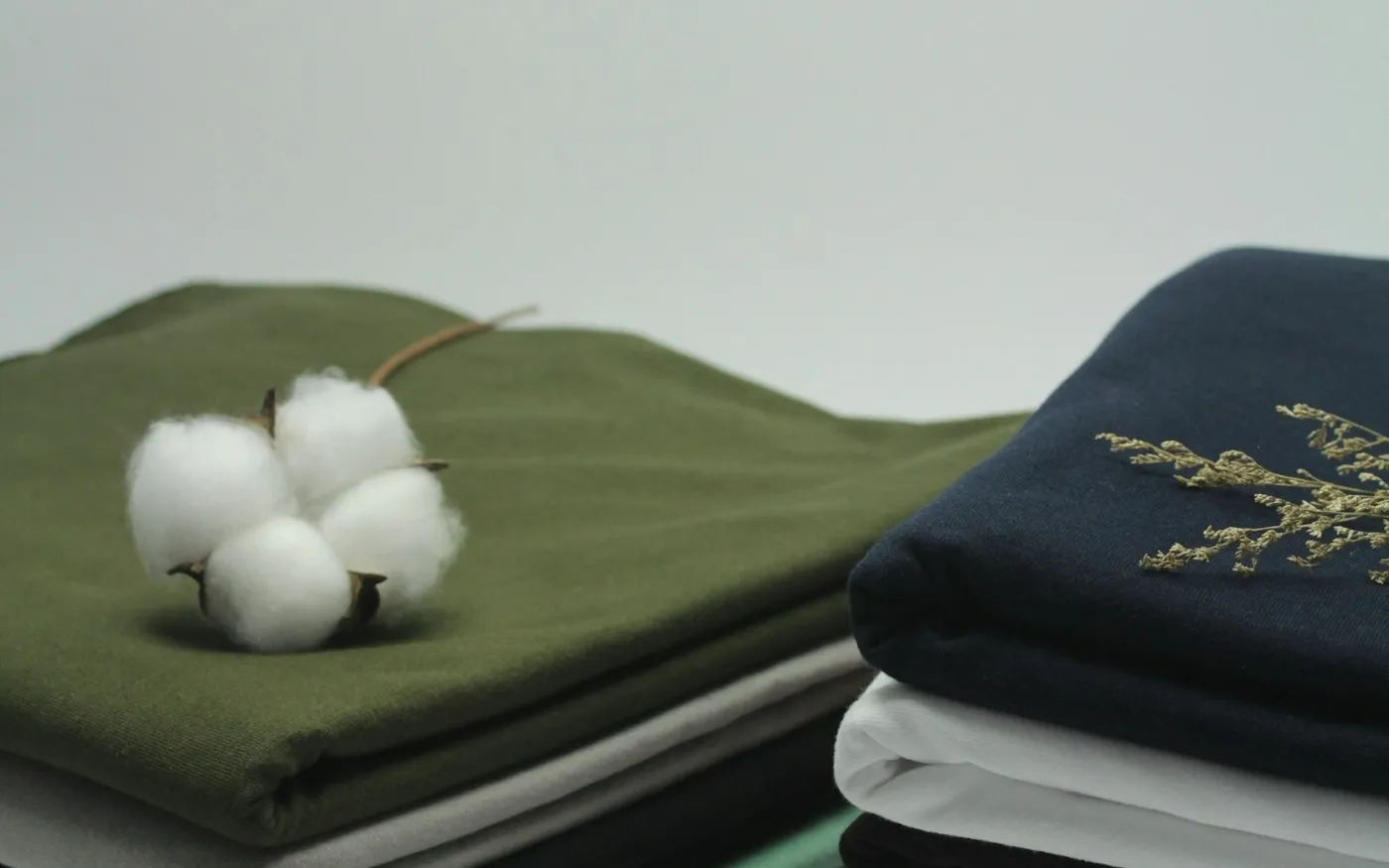
Sourcing sweatshirt fabric is really a decision about two numbers: the inner-face weight and how that weight behaves after fifty washes. Get those right and a hoodie holds its shape all season; get them wrong and the pile flattens, the shoulders drop, and the returns pile up. At RT Tekstil we have knit fleece for the sweat family since 1980, and this page lays out how two-thread (2 İplik) and three-thread (3 İplik) fleece actually differ, which GSM fits which garment, and what to check before you commit a container.
The Sweat Family: What Two-Thread and Three-Thread Fleece Actually Are
The word "fleece" hides two very different constructions, and buyers who conflate them end up with the wrong weight for their garment. Both are knit on circular sweat machines, but the number of yarns fed into each stitch changes everything downstream.
Two-thread fleece (2 İplik) uses a ground yarn plus a lighter loop yarn. The result is a smoother, lower-bulk fabric, usually kept between 220 and 280 g/m². Its inner face can be left flat or lightly brushed, which makes it the workhorse for T-shirt-weight crewnecks, spring sweatshirts and mid-season hoodies that need to layer without adding bulk.
Three-thread fleece (3 İplik) adds a third, heavier loop yarn that we then brush into a deep, soft pile on the reverse. That extra yarn pushes the weight up to roughly 280–380 g/m² and traps far more air, which is why it defines winter hoodies, heavyweight joggers and the fuller "gym" hoodie feel. The trade-off is warmth and structure against a heavier hand and a longer dyeing cycle.
Alongside these two sits kaşkorse, a dense double-plate interlock in the 200–300 g/m² band with a velvety, almost suede-like face. It is a premium alternative when a brand wants a smoother, more refined sweat look rather than a classic brushed pile. We cover it in depth on our wholesale kaşkorse fleece fabric page, which walks through composition and pricing for that specific construction.
Choosing GSM and Composition: A Buyer's Comparison
Nearly every sweatshirt sourcing decision reduces to three levers — weight, composition and finish. The table below is the framework our own technicians use when a buyer sends a target garment and asks "which fleece?".
| Construction | Typical weight (g/m²) | Common composition | Best-fit garments | Character |
|---|---|---|---|---|
| Two-thread fleece (2 İplik) | 220–280 | 100% cotton or cotton–polyester | Spring crewnecks, mid-season hoodies, layering sweats | Lighter, smoother, quick to dry |
| Three-thread fleece (3 İplik) | 280–380 | Cotton, cotton–poly, or with elastane for stretch | Winter hoodies, heavyweight joggers, oversized fits | Warm, plush brushed face, structured drape |
| Kaşkorse (interlock) | 200–300 | Cotton or cotton–polyester | Premium sweats, elevated hoodies, dresses | Velvety smooth face, dense and refined |
On composition, the practical rule is that higher cotton content improves softness, breathability and brush quality, while a share of polyester adds dimensional stability, faster drying and better shape retention on heavier joggers. A touch of elastane (typically 3–8%) is worth specifying when the garment has ribbed panels or a slim, athletic cut that must recover after wear.
A quick decision checklist before you brief us
- Season and warmth target: spring/layering leans two-thread; autumn–winter leans three-thread.
- Garment weight goal: pick your finished-garment feel first, then map it to a GSM band.
- Inner-face feel: flat or lightly brushed (two-thread) versus deep brushed pile (three-thread) versus velvety interlock (kaşkorse).
- Stretch and recovery: add elastane only where the cut or ribbing demands it.
- Colour discipline: if you are running repeats, lock a lab-dip so shade holds across containers.
- Print or dye method: flag sublimation or heavy placement prints early, as they affect the base you should choose.
How Integrated Production Keeps Your Fleece Consistent
Consistency is where sweatshirt programs succeed or quietly fail. A hoodie that arrives 20 grams heavier or half a shade off from the last container costs you more in QC and customer trust than any per-kilo saving. This is the part that separates a manufacturer from a trader.
At RT Tekstil, knitting, dyeing and finishing all run under one roof in our Istanbul integrated production, supported by our Tekirdağ dyehouse and colour laboratory. Practically, that means when your sample is approved we lock the loop length on the knitting machine, the recipe in the dyehouse and the compacting and brushing settings in finishing — then reproduce that exact set of parameters for every repeat order.
For fleece specifically, three variables have to be controlled together: weight (grams per square metre), shrinkage (dimensional stability after wash) and the brushed face (pile depth and softness). Because we own each step, we can hold all three at once. A buyer relying on separately sourced knitting and dyeing cannot promise that the fabric leaving the dyehouse still matches the loop structure it was knit with.
Colour is governed by our lab-dip and zero colour deviation process: we submit a physical lab-dip for your approval before bulk, and that approved standard travels with the order across every reorder. On the compliance side, our fleece is produced under OEKO-TEX standards and to the export requirements we have satisfied while shipping to 40+ countries — meaningful reassurance when your buyers ask about skin-contact safety on children's and next-to-skin sweatwear.
From Garment Brief to Container: A Field View
A typical program with us moves through the same sequence, and knowing it in advance shortens your lead time. First, you send the target garment or spec — season, target GSM, composition and any stretch or print needs. We recommend the construction and weight from the sweat family, then produce a hanger sample so your team can judge the hand-feel and the brushed face before anything is committed.
Once the base is approved, we run the lab-dip for each colour. When shades are signed off, the order moves to bulk knitting, dyeing and finishing, and then to container shipment delivered to your port or to your door under agreed Incoterms. With an annual capacity of 8,000 tons, we plan repeat programs so the same anchor weights are available season after season, which is exactly what apparel brands need when a hoodie becomes a core line.
Two fabrics frequently ship alongside sweat fleece in a full tracksuit program. If you are building matching sets, our dedicated tracksuit fabric supplier page explains how the fleece pairs with coordinating bottoms and trims. And for buyers weighing the wider category — where fleece sits against jersey, rib and piqué in a full range — our overview of the knit fabric market gives the broader sourcing context.
Request a Sample or a Container Quote
The fastest way to judge sweatshirt fabric is to feel it. Tell us your target garment, GSM band and composition, and we will send a sample of the matching two-thread or three-thread fleece, prepare a lab-dip for your colours, and quote container-scale supply for your collection. Reach our team through the central contact channel on our site, and we will map the right fleece to your program.
Frequently Asked Questions
What is the difference between two-thread and three-thread sweatshirt fabric?
Two-thread fleece (2 İplik) sits at roughly 220–280 g/m² and carries a lighter, unbrushed or lightly brushed inner face for mid-season sweatshirts. Three-thread fleece (3 İplik) runs about 280–380 g/m² and adds a third loop yarn that we brush into a dense, warm pile for winter hoodies and joggers. The choice comes down to season, target weight and how plush you want the inside face to feel.
What GSM should I order for hoodies versus lightweight sweatshirts?
For lightweight and mid-season sweatshirts, two-thread fleece around 240–280 g/m² is the usual pick. For structured winter hoodies and joggers, three-thread brushed fleece from 300 to 360 g/m² gives the warmth and drape most brands expect. If your collection spans both, many buyers standardise on a 280 g/m² two-thread and a 330 g/m² three-thread as an anchor pair.
Can you match a specific Pantone or an approved lab-dip for a sweatshirt program?
Yes. Our Tekirdağ dyehouse and colour laboratory work to a lab-dip and zero colour deviation standard, so we submit a lab-dip for your approval before bulk dyeing and hold the approved shade across repeat containers. This matters most for fleece, where a heavy brushed face can otherwise read differently batch to batch.
What is a realistic order quantity for wholesale sweatshirt fabric?
We are set up for container-scale supply, typically in the 10 to 100 ton range per order across colours and weights, drawn from an annual capacity of 8,000 tons. Programs usually begin with an approved sample and a lab-dip, then move to a first container once specifications are locked.
Is your sweatshirt fabric certified for skin contact and export markets?
Yes. Our fleece is produced under OEKO-TEX standards and to the export requirements we have met while shipping to 40+ countries since 1980. Because knitting, dyeing and finishing run under one roof, we control the fibre-to-finish chain that these certifications depend on.
How do you keep GSM and shrinkage stable across repeat orders?
Because we knit, dye and finish in-house, we lock the loop length, dyehouse recipe and compacting settings once your sample is approved, then reproduce them for every repeat. That integrated control is how we hold weight tolerance and dimensional stability container after container, which is the part off-the-shelf traders usually cannot promise.